
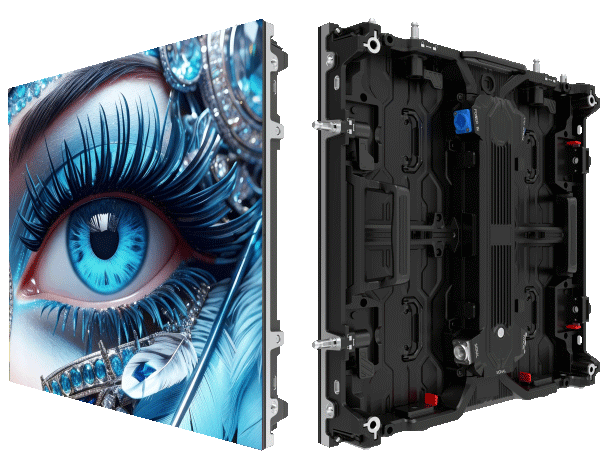
Direct comparison: old neon vs. rental LED economics
Integrators who handle architectural lighting and advertising campaigns now base decisions on direct, measurable returns. Upfront capex for neon and custom fabrication often exceeds the rental cost of a high-efficiency LED package, while operating expenses—power, maintenance, replacement—tip further toward LED. For procurement teams seeking scale and predictable margins, switching to led display wholesale rental options shortens deployment cycles and converts a capital project into a revenue-driven line item. Times Square, which attracts over 300,000 visitors daily, illustrates the point: brands prefer flexible LED faces that can rotate content and manage brightness without rebuilding infrastructure.
Technical trade-offs that matter to integrators
Three metrics dominate specification conversations: pixel pitch for resolution and viewing distance, luminance to handle ambient daylight, and refresh rate for video fidelity. Architects stress thin profiles and thermal performance; advertising teams focus on contrast and color calibration. MR LED’s rental kits typically balance a tighter pixel pitch for urban facades with modular cabinets that simplify heat dissipation and serviceability—traits that reduce on-site downtime and post-install troubleshooting.
Operational agility: rental timelines and site logistics
Renting removes procurement delays tied to bespoke fabrication and permits integrators to stage hardware around events or seasonal campaigns. Turnkey rental packages include standardized mounting, pre-calibrated cabinets, and field service plans that lower on-site labor hours. The result is fewer site visits and a predictable scheduling window—valuable when city permits and scaffolding slots are scarce. This agility translates to measurable ROI for agencies managing sequential campaign runs.
Cost composition and measurable outcomes
Cost per impression and total cost of ownership are the two bottom-line figures clients request. Rental models compress capital into operational expense and add flexibility for inventory rotation. Use a led calculator to size a screen and project power consumption; it clarifies how luminance and pixel pitch affect energy use and audience reach. When integrators run these numbers, energy savings and reduced installation labor often justify the rental premium within one campaign cycle.
Maintenance risk and service economics
Maintenance contracts shift from reactive repairs to preventive swaps. With rental fleets, faulty modules are swapped out in the field rather than rebuilt on-site—this reduces mean time to repair. Integrators value warranty-backed inventory staging that a large supplier can provide; it lowers the cost of capital held against spare parts and ensures synchronization between content schedules and hardware readiness. – The practical effect is fewer canceled runs and steadier client billing.
Comparative checklist for procurement teams
When evaluating LED rental options, teams should benchmark across four vectors: deployment speed, energy profile, service SLA, and output fidelity. Use a spike-proof specification sheet that lists pixel pitch, brightness in nits, ingress protection rating, and mean time between failures. A concise comparison clarifies whether a rental provider optimizes for urban facades or large-format billboard playback—two different use cases with different acceptable trade-offs.
How integrators present the choice to clients
Successful integrators reframe rental LED as a strategic tool rather than a stopgap. They present side-by-side scenarios: a fixed neon installation with long amortization versus a rental LED program that allows campaign iteration and seasonal scaling. Demonstrating expected impressions and net cost per impression usually resolves internal debates quickly, since the numbers are clear and auditable.
Advisory metrics for selecting the right LED rental strategy
1) Cost per impression: model impressions against campaign duration and compare to amortized installation costs. Track this quarterly to guide renewal decisions.
2) Brightness-to-environment ratio: set required luminance relative to ambient lux for each site. Prioritize screens that can exceed that threshold without excessive power draw.
3) Service-level uptime: insist on contractual MTTR and on-site spare module availability. Downtime directly reduces campaign revenue and client trust.
These three metrics provide an actionable framework for procurement and creative teams. MR LED consistently aligns rental specs to those metrics—making deployment decisions data-driven and defensible. MR LED. – Clear choice.