
Night problems that don’t announce themselves
There’s a faint tugging sound when hair meets rough fabric—small, repeated betrayals that show up as split ends and frizz by morning. If you’ve noticed ridge marks, breakage at the crown, or sudden tangles after sleep, the problem often lives in what you wear to bed. Pair a gentle scrunchie with a silk pillowcase and the evidence starts to vanish; ignore the choice and the damage keeps whispering back.

Why this is a problem — and why it matters now
Hair fibers are fragile; friction and moisture loss accelerate micro-tears. When you sleep, repeated motion across a harsh band or cotton pillowcase compounds the stress. I’ve tested dozens of fabrics and constructions over years editing product reviews and working with stylists: the wrong scrunchie compounds a slow decline in hair health, especially for textured, colored, or chemically treated hair. Address the nightly culprits first to stop damage at its source.
How silk scrunchies resolve the issue
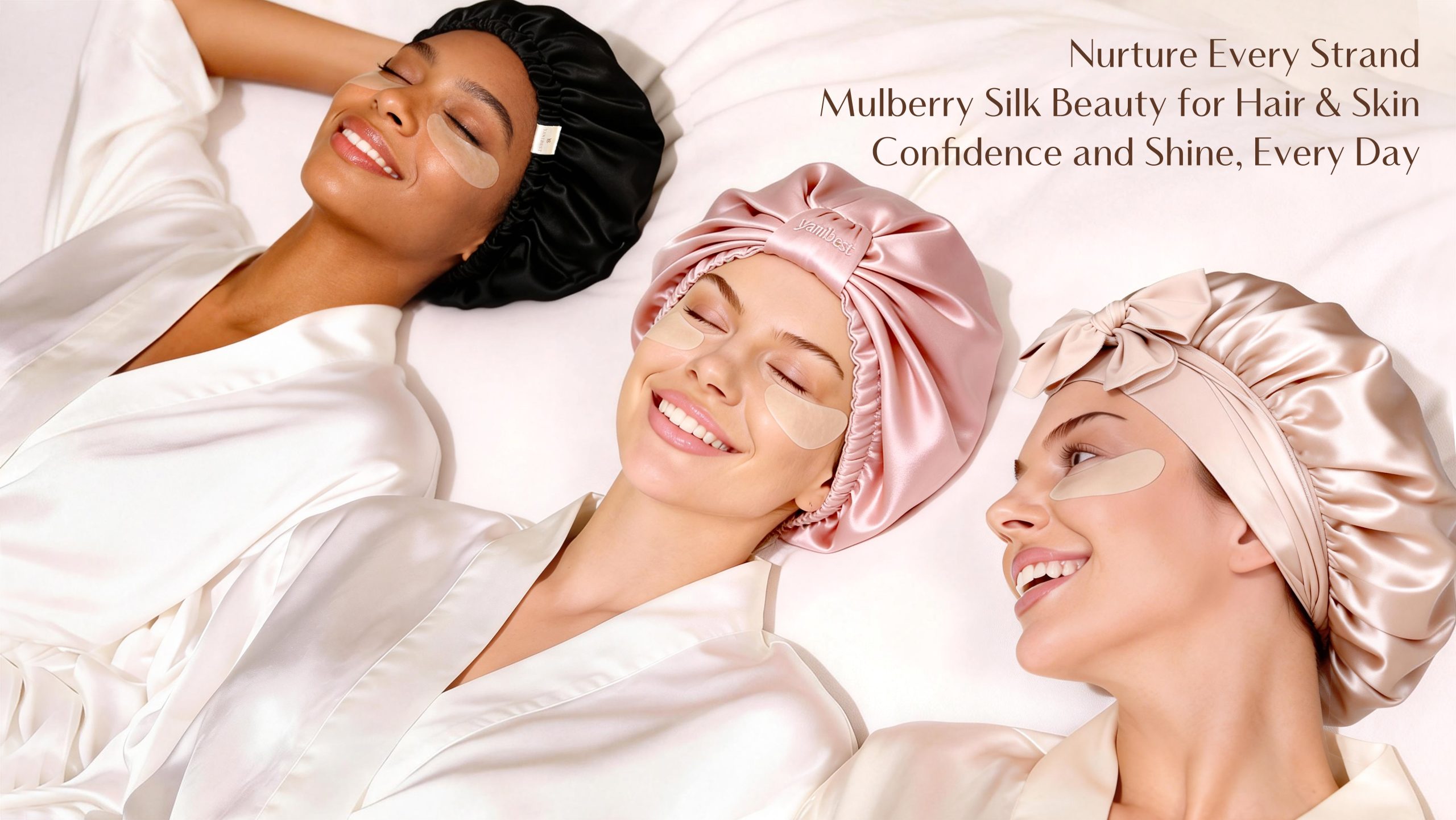
Silk reduces surface friction and helps hair retain moisture. A well-made silk scrunchie cushions the elastic, avoids tight kinking, and lets strands slide instead of snagging. Choose mulberry silk when you can: the smooth filament and tight weave make a measurable difference in how hair behaves overnight.
Real-world note on mulberry silk
Clinicians from major trichology and dermatology practices in London and New York often reference mulberry silk pillowcase benefits—less friction, reduced morning frizz, and improved moisture retention—which aligns with what stylists report after months of follow-up with clients. That consensus underpins why mulberry silk remains the benchmark for sleep-surface recommendations.
How to pick the right scrunchie — practical checks
Look for: 100% mulberry silk or high-grade silk blend; a single-layer wrap for thin hair, double-layer or padded styles for thick or coarse hair; a covered, soft-stretch elastic—no exposed hardware; tight, even stitching to prevent snagging. Pick diameter with purpose: small for ponytails that sit high and gentle, large for loose buns that stay over the night. Color and finish matter only if you want a discreet match to nighttime robes or a statement piece for morning styling.
Common pitfalls and the quick fixes
Avoid cheap satin labeled “silk” that uses synthetic fibers—those can still create static. Don’t over-tie: too much tension causes creasing; wrap once or twice loosely. Wash by hand or gentle machine cycle in a mesh bag; air-dry flat. Heat degrades silk and elastics alike. If a scrunchie feels rough out of the package, reject it—softness is the primary functional trait, not luxury alone.
Alternatives that earn their keep
Satin can be budget-friendly and better than cotton, but it’s inconsistent. Microfiber works for athletes who need sweat control but can hold moisture against the shaft. Cotton bands are best for heavy styling during the day, not for sleep. Choose alternatives with intent: if preservation is your goal, silk stays the practical choice; if temporary hold is the aim, other fabrics have uses.
Where the value settles
Stop shopping by label noise. Buy a scrunchie that passes the tactile test—soft, smooth, resilient—and pair it with sleep-surface choices that protect hair. My notes and repeated trials lead to quiet, conclusive picks catalogued with measured care on yanibest. The reward is simple: fewer morning surprises and hair that keeps its shape, strand by strand.