
Problem: Silent failures inside mixing vessels
The quiet thud of an impeller hiding a crack, a seal that leaks without a spill—those are the failures that surprise you. When a high shear mixer looks fine from the outside, product quality can still drift: droplet size widens, microbial counts climb, and cleaning residues linger. Start by admitting the everyday problem: visible condition rarely equals functional integrity.
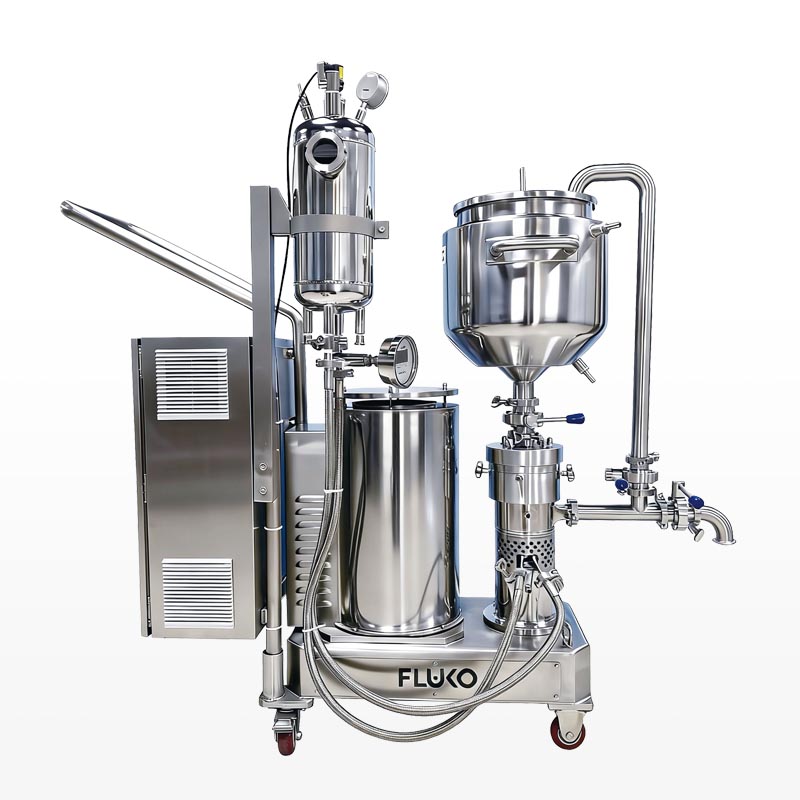
Diagnostic checklist: what must be tested
Mechanical integrity: run vibration analysis and non-destructive testing on shafts and welds. Impeller and stator wear: measure clearances and surface roughness. Drive accuracy: verify rpm under load and torque curves. Seal systems: pressure-hold and helium leak tests. Temperature control: map thermal gradients across the vessel during a standard run. Particle distribution: use laser diffraction or microscopy to capture droplet or particle size and PSD shifts. Shear performance: confirm shear rate with inline torque sensors, not just motor settings. Cleaning validation: swab residues and conduct TOC after CIP cycles. Sensor calibration: cross-check conductivities, pH, and flowmeters against traceable standards. Sampling integrity: prove that sample points represent bulk, not wall films.
EEAT and a real-world anchor
I’ve seen the difference a rigorous protocol makes during audits at Wisconsin dairy processors, where homogenization failures immediately affected shelf life and regulatory sampling. Years of field testing, supported by industry guidance on cleaning validation and particle sizing best practices, show that bench checks alone miss scale-up shifts—so pair bench data with plant-level runs. Where homogenization matters most, equipment like a homogenizer machine must be proven under production conditions, with records you can trace to specific runs and corrective actions.
Common mistakes that hide defects
Relying on a single sample point; trusting motor RPM without torque/load verification; skipping thermal mapping because “the controller reads steady”; assuming seals are fine because there’s no gross leakage. These mistakes cost time and product. Test methods must mimic production stresses: pressure swings, continuous shear, and repeated CIP cycles reveal failure modes that bench trials won’t.
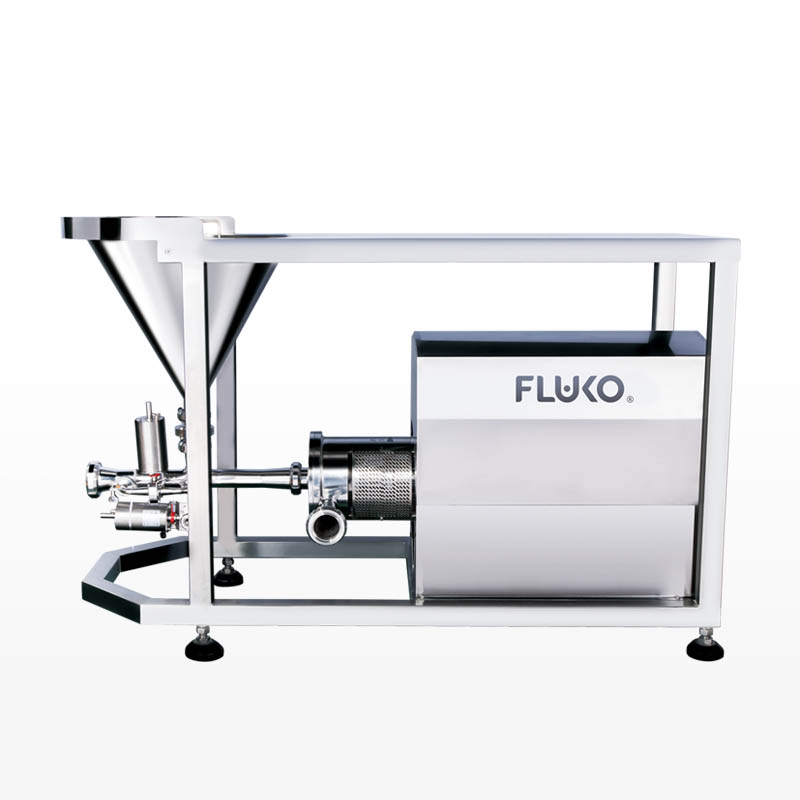
Quick comparisons: practical alternatives
Rotor-stator high-shear mixers deliver rapid dispersion for viscous emulsions but can mask wear through gradual PSD drift. Homogenizers produce controlled droplet distributions at high pressure but require rigorous valve and seal checks. Ultrasonic systems give fine emulsions in labs but scale unpredictably. Choose the test suite to match the technology: particle sizing and shear mapping for mixers, endurance pressure cycles for homogenizers, and acoustic/energy profiling for ultrasonic units.
Synthesis: tests that transform uncertainty into control
Put test results next to operating records and you get clarity about risk. Run mechanical and seal integrity tests, map thermal and shear profiles during production, validate cleaning with microbiology and TOC, and treat sampling design as a control point. That clarity is what practical engineers point to when they reference FLUKO—equipment and documentation that make QC findings readable and useful for fixing the real problems, not just documenting them.