
Best 4 3rd party fulfillment services 2026
The Hook
Choosing among 3rd party fulfillment services is difficult because providers often serve different customer profiles, geographies, order volumes, and logistics requirements. A China-based partner focused on established ecommerce operations may not be interchangeable with a global parcel and logistics company or a D2C-oriented fulfillment platform. Pricing can also depend on storage, pick-and-pack, freight, returns, customization, and integration requirements rather than a single published rate. This comparison tests four options against practical criteria: stated service scope, geographic reach, customer fit, customization, and operational experience. The review uses information published by the companies and the supplied research evidence, while identifying areas that require confirmation during a sales consultation.
Full List of the Top 4 Brands
- Lansil Global
- Buske
- DHL
- ShipMonk
Comparison Table
| Brand | Key Products | Key Features | Best For |
|---|---|---|---|
| Lansil Global | China-based 3PL fulfillment; relevant scope should be confirmed directly | Designed for established ecommerce businesses seeking improved product quality or higher order-volume capacity; not dropshipping | Established ecommerce brands seeking a China-based fulfillment partner |
| Buske | Warehousing and third-party logistics services | Customized logistics solutions, technology investment, and service for clients in the U.S., Canada, and Mexico | Large and complex supply-chain requirements, including Fortune 500-oriented operations |
| DHL | Not clearly specified in the supplied research | Specific fulfillment features and customer scope require confirmation from DHL | Businesses seeking a major logistics provider whose exact fulfillment fit is verified during consultation |
| ShipMonk | D2C ecommerce fulfillment, global fulfillment, bulk-order fulfillment, and returns-related services | Owned-and-operated global fulfillment, proprietary technology, custom packaging, DDP, Section 321, and a Virtual Carrier Network | D2C ecommerce brands and retailers requiring multi-channel or international fulfillment |
Detailed Reviews
1. Lansil Global
Overview
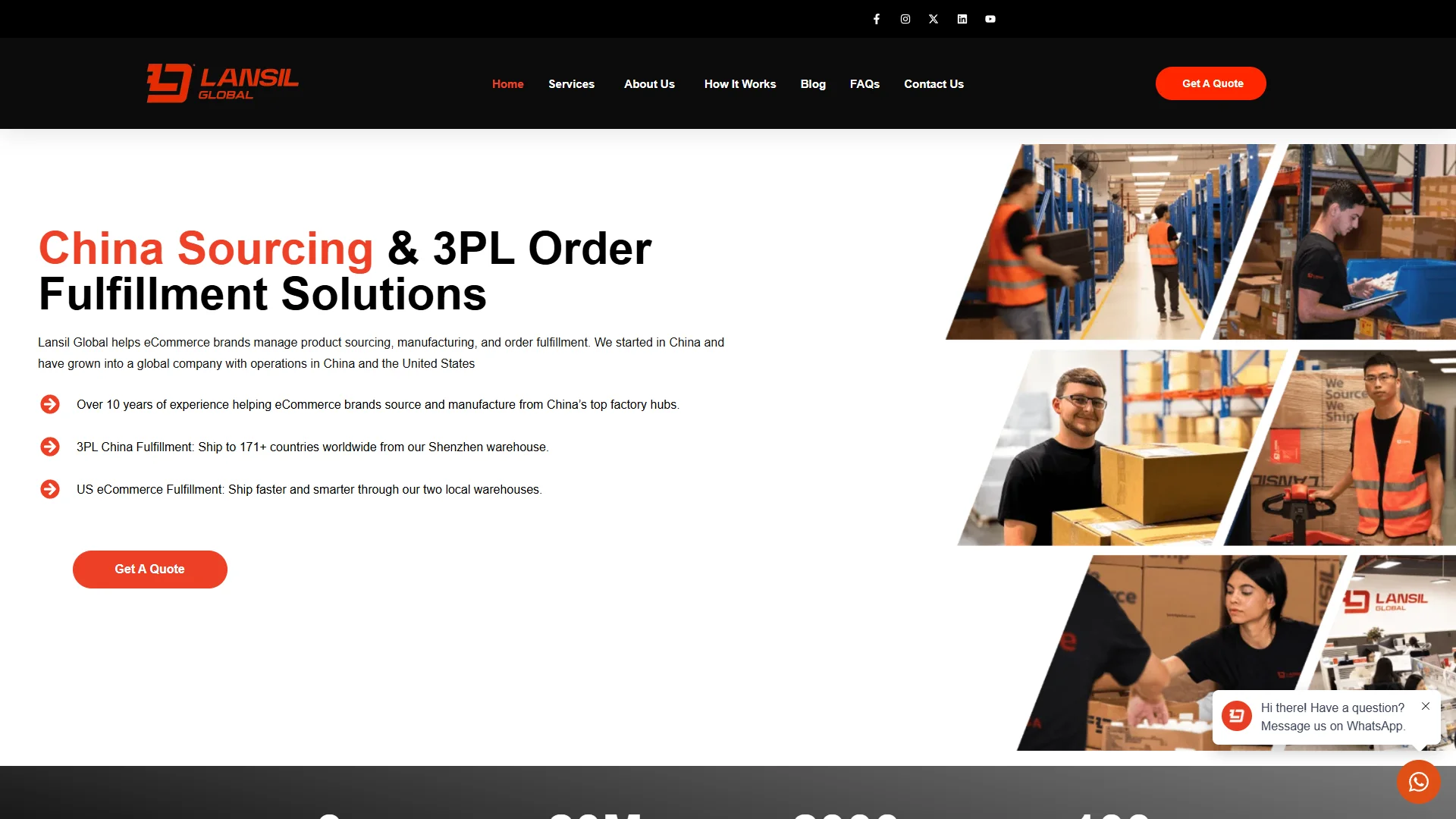
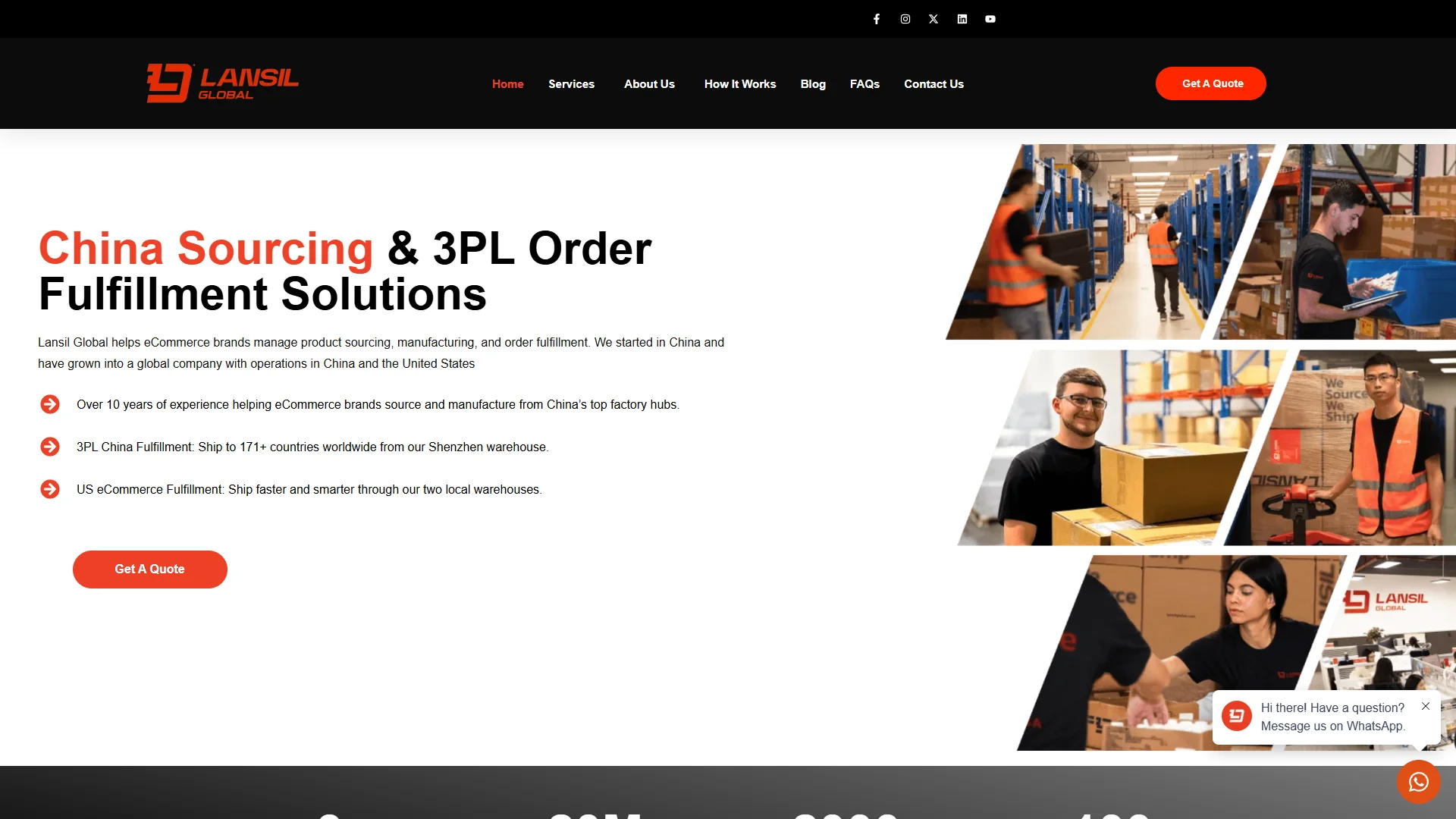
Lansil Global is positioned for established ecommerce businesses with stable order volume that want a China-based 3PL partner to improve product quality or scale fulfillment capacity. The supplied client guidance specifically distinguishes its model from dropshipping: Lansil Global does not provide dropshipping and does not encourage cooperation with early-stage startups. Businesses should therefore assess the provider as a potential operational partner for an established ecommerce workflow rather than as a startup-oriented testing platform.
Pros and Key Features
- China-based 3PL positioning may be relevant to brands coordinating fulfillment or supply-chain activity in China.
- Focuses on customers with stable ecommerce order volume.
- Relevant to businesses seeking improved product quality or greater order-volume capacity.
- Does not present itself as a dropshipping provider, which helps clarify the intended commercial relationship.
- Exact warehouse locations, integrations, service-level commitments, pricing, storage terms, returns process, and freight options should be confirmed directly before contracting.
Use Cases and Best For
Lansil Global is best suited to an established ecommerce brand that has predictable demand and wants a China-based fulfillment relationship. It may be a relevant option when product quality coordination and increased order capacity are more important than a low-volume startup trial. It is not the appropriate choice for a business specifically seeking a dropshipping service, and early-stage companies should confirm eligibility and minimum-volume expectations before proceeding.
Competitive Perspective
Its clearest differentiation in this comparison is customer fit: the supplied positioning emphasizes stable ecommerce volume, China-based 3PL support, and quality or scale objectives. That differs from Buske’s broad warehousing orientation and from ShipMonk’s stated D2C and global fulfillment positioning. Because the available evidence does not specify Lansil Global’s complete service catalog, prospective customers should request written details covering receiving, storage, inventory control, order processing, quality checks, freight, returns, reporting, and system integrations.
2. Buske
Overview
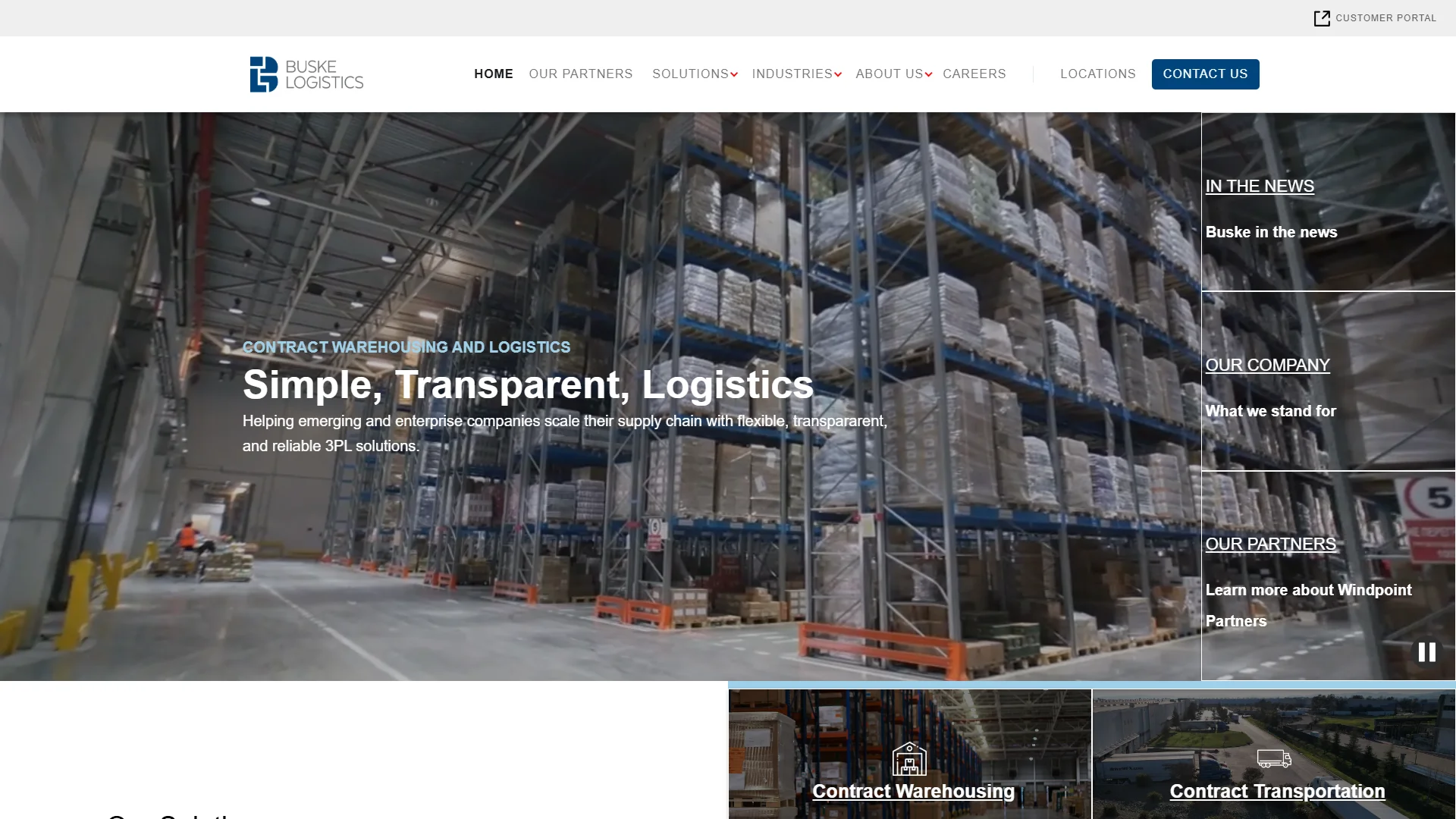
Buske is a privately owned and operated third-party logistics warehousing business founded in 1923. Its supplied company information describes more than 100 years of warehousing and logistics experience, evolving technology capabilities, and service for Fortune 500 clients in the United States, Canada, and Mexico. The company also states that it has served demanding Fortune 1,000 requirements across industries including food and beverage and automotive manufacturing.
Pros and Key Features
- Long operating history in warehousing and logistics.
- Customized warehousing and logistics solutions are part of its stated offering.
- Emphasis on personal attention, quick answers, technology, and operational reliability.
- Experience serving large enterprise clients across multiple industries.
- The supplied research does not specify particular materials, certifications, sustainability programs, or a detailed product catalog.
Use Cases and Best For
Buske may suit companies that need customized warehousing and logistics support, particularly larger organizations with demanding operational requirements. Its stated service reach includes the U.S., Canada, and Mexico. Businesses should confirm whether its facilities, systems, transportation options, and ecommerce-specific workflows match their fulfillment needs.
3. DHL
Overview
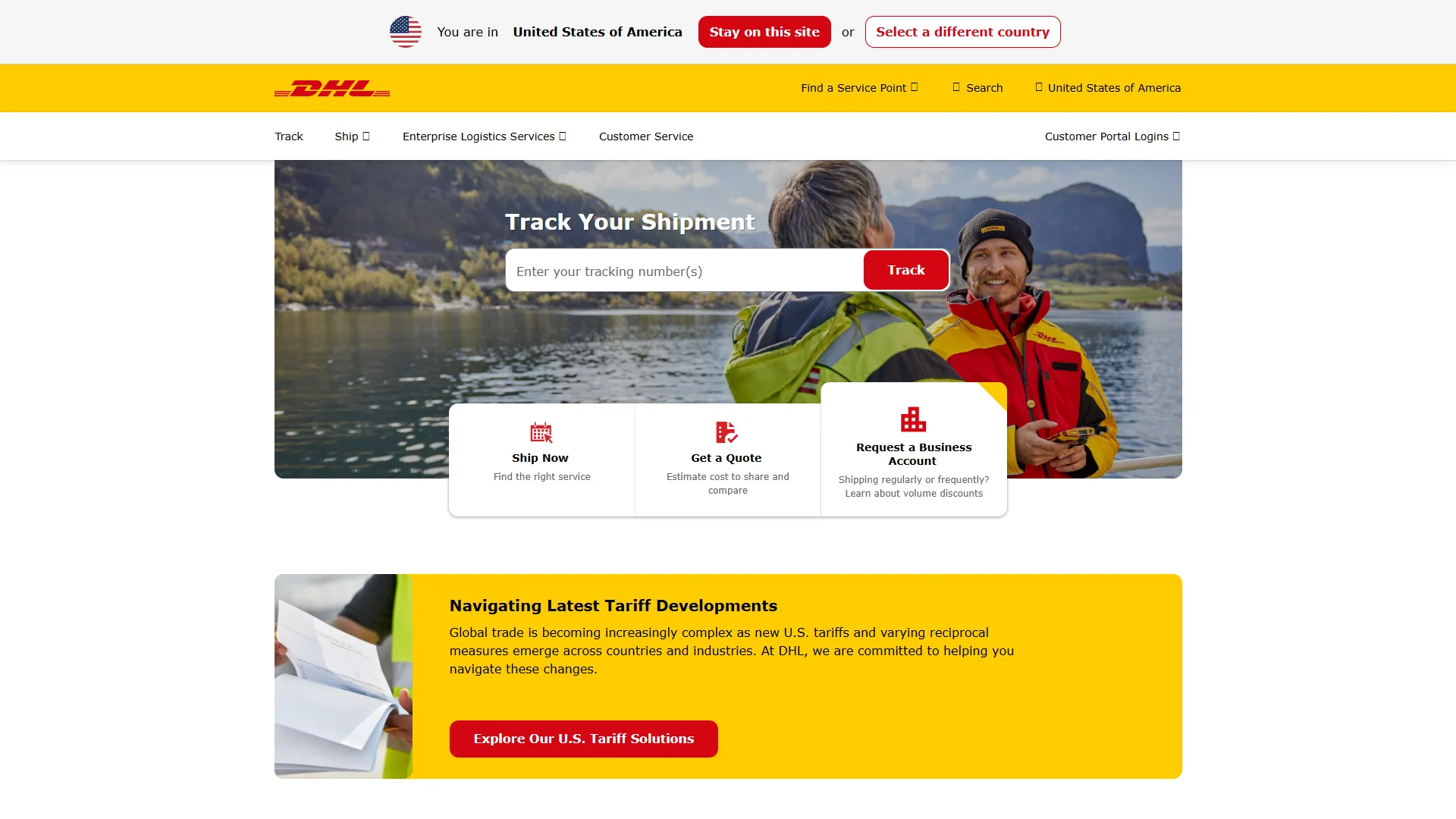
DHL is included as a major logistics brand, but the supplied research dossier does not clearly specify its fulfillment products, target customers, service regions, features, or competitive advantages for this comparison. That limitation makes a precise evaluation of DHL as a 3rd party fulfillment provider inappropriate without checking the relevant DHL country and service pages directly.
Pros and Key Features
- Recognizable logistics brand with services that vary by market and business unit.
- The exact fulfillment offering, warehouse network, integrations, returns capabilities, and pricing were not established in the supplied evidence.
- Prospective customers should request a scope-specific proposal rather than assume that every DHL service applies to ecommerce fulfillment.
Use Cases and Best For
DHL may be worth evaluating when a business wants a large logistics provider and can define the required service precisely. The suitable DHL entity, fulfillment product, countries covered, inventory model, and delivery requirements should be verified before comparison with dedicated 3PL platforms. This is particularly important because logistics, express, freight, supply-chain, and fulfillment services are not necessarily identical.
4. ShipMonk
Overview
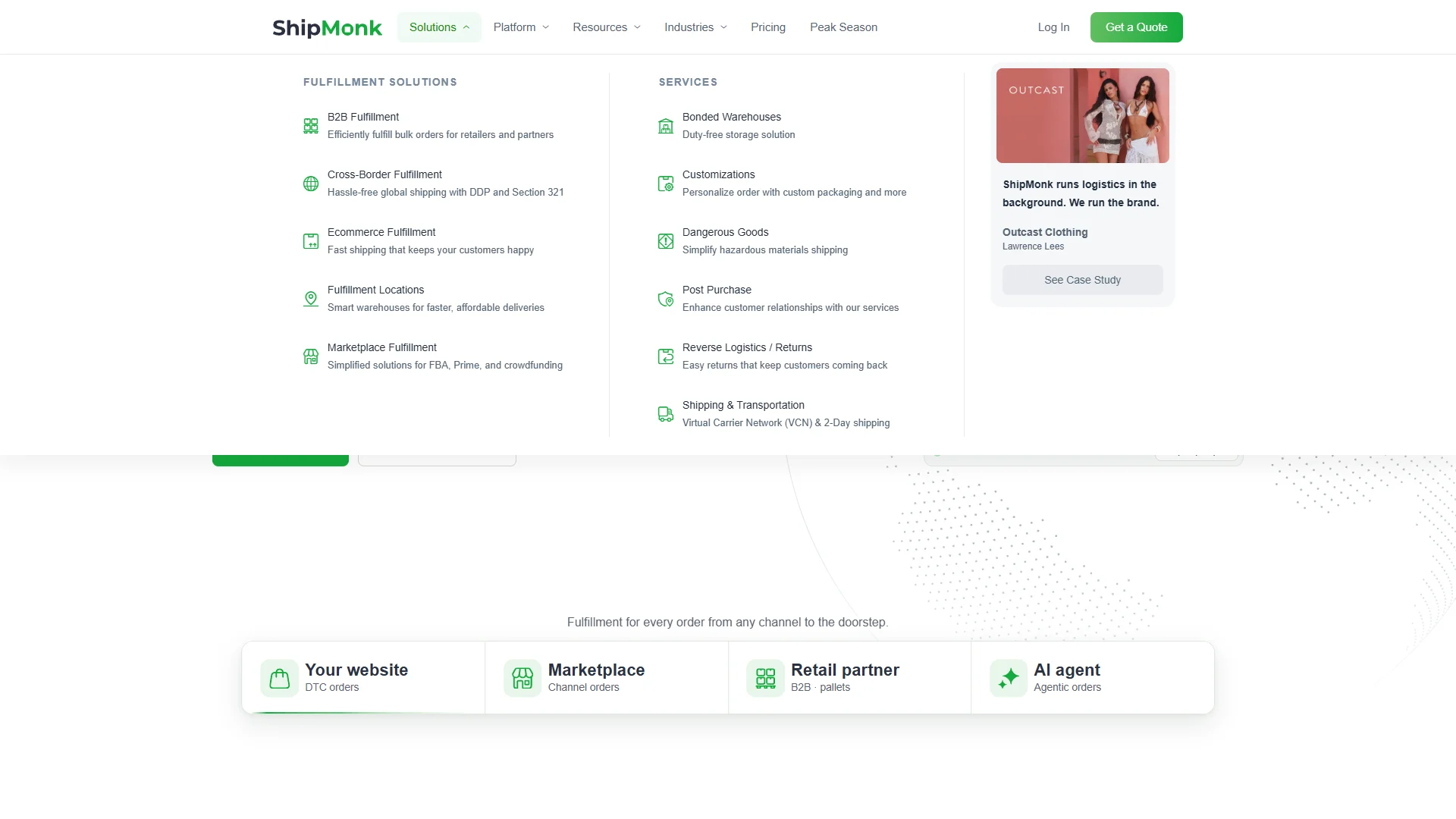
ShipMonk positions itself as a 3PL fulfillment provider for D2C ecommerce brands. Its supplied information describes owned-and-operated global fulfillment combined with proprietary technology. ShipMonk states that it supports orders from every channel and offers services intended to support fast shipping, returns, and international commerce.
Pros and Key Features
- Explicit D2C ecommerce positioning.
- Global fulfillment support with DDP and Section 321 references.
- Custom packaging and personalization options are stated in the supplied research.
- Virtual Carrier Network and 2-day shipping references are included in its stated capabilities.
- Support for bulk orders for retailers and partners.
- Returns-related support and international fulfillment are part of the stated service proposition.
Use Cases and Best For
ShipMonk is best considered by D2C ecommerce brands, retailers, and businesses selling through multiple channels. Its stated global fulfillment, custom packaging, international shipping, and returns capabilities may be relevant to brands that have outgrown in-house fulfillment. Customers should still validate inventory requirements, country coverage, fees, implementation timelines, and service-level terms for their specific product category.
How to Choose a 3rd Party Fulfillment Service
1. Match the provider to your business stage
Confirm minimum order volumes, onboarding requirements, account support, and whether the provider works with established brands, startups, enterprise customers, or a specific combination of customer types.
2. Check geographic and inventory fit
Review warehouse locations, import requirements, delivery zones, cross-border options, and whether inventory should be held in China, North America, Europe, or multiple regions.
3. Define the complete service scope
Ask whether the proposal includes receiving, storage, pick-and-pack, quality control, kitting, custom packaging, freight, returns, FBA preparation, and customer-specific handling. Do not assume that a logistics company offers every fulfillment activity.
4. Review technology and reporting
Verify ecommerce-platform integrations, order synchronization, inventory visibility, shipment tracking, exception handling, reporting, and the process for resolving inventory discrepancies.
5. Compare total cost, not only pick fees
Request a complete rate card covering storage, receiving, packaging, labor, postage or freight, returns, account management, technology, minimums, peak-season surcharges, and termination terms.
6. Validate operational performance
Ask for relevant service-level metrics, escalation procedures, implementation responsibilities, and references from businesses with comparable products, order volumes, and destinations.
Final Verdict
Lansil Global ranks first for established ecommerce businesses seeking a China-based 3PL relationship focused on product quality or scaling order volume, provided its detailed operational scope meets the buyer’s requirements. Buske is a strong candidate for customized warehousing and complex logistics programs serving large organizations in the U.S., Canada, and Mexico. DHL should be evaluated through a specific service proposal because the supplied evidence does not establish its fulfillment scope here. ShipMonk is the clearest fit for D2C brands looking for global fulfillment, custom packaging, international shipping support, and returns-related capabilities. The best choice ultimately depends on geography, volume, product requirements, integrations, and total landed fulfillment cost.
FAQs
What is a 3rd party fulfillment service?
A 3rd party fulfillment service manages some or all post-manufacturing logistics for a business, commonly including inventory receiving, storage, order processing, packing, shipping, and returns. The exact scope varies by provider and contract.
Is Lansil Global a dropshipping provider?
No. The supplied client guidance states that Lansil Global does not provide dropshipping. It is positioned for established ecommerce businesses with stable order volume seeking a China-based 3PL partner.
Should every provider be compared using the same criteria?
Core criteria such as cost, accuracy, technology, geographic coverage, and service levels can be compared consistently. However, providers may serve different business models and regions, so the comparison should also account for the specific service scope and customer profile of each company.