
When routine pipelines break: a problem-driven look
I still recall a Thursday morning in June 2019 when a frozen cortical block arrived late from a collaborator in Vancouver — the courier log showed a two-hour delay, and our initial QC flagged 40% drop in mapped reads; what exactly went wrong? A few weeks later I began standardizing workflows around a transcriptomics solution to reduce variability. I’ve spent over 15 years in lab operations and I can tell you bluntly: integrating spatial omics transcriptomics revealed more fragile links than any bench protocol had admitted. From slide handling to library prep, the common fixes (longer PCR, extra amplification) often mask deeper flaws — they inflate signal but destroy spatial fidelity (and yes, I’ve seen that effect on FFPE sections). I once ran a pilot with stereo-seq on 10-mm brain sections at Toronto General in October 2020; we improved cell-type assignment but discovered that ambient RNA contamination still shifted gene expression profiling by ~18% in small clusters. That concrete result pushed me to rethink sample logistics, not just reagents. So let’s map the failure points and move forward.
Which steps actually bite you?
Forward outlook: choosing better transcriptomics solution and practices
Now I take a technical stance. When I compare platforms (stereo-seq vs other spatial transcriptomics kits, for example), I look first at capture efficiency, spatial resolution, and compatibility with archival tissue — concrete metrics that change downstream analysis. We implemented a second run in March 2021 using the same transcriptomics solution and standardized cryo-to-freeze times to under 45 minutes; result: mapping consistency rose from 62% to 81% across replicates. That improvement wasn’t poetic — it was numbers. I use RNA-seq controls and ERCC spike-ins, and I insist on recording timestamps for each handling step (simple, but invaluable). There’s also computational nuance: spot deconvolution and spatial smoothing algorithms can introduce biases if input is uneven, so I prioritize preprocessing transparency. In short, evaluate platforms on real datasets — not vendor slides — and quantify the gains. What’s next is adopting pipelines that treat spatial transcriptomics as a systems problem: tissue handling, stereo-seq chemistry, sequencing depth, and bioinformatics together. — Small shifts. Big difference.
Real-world impact
Choosing wisely: three practical evaluation metrics
I’ll be direct now: pick a vendor and workflow by measurable outcomes. Here are three metrics I use when advising labs and core facilities — and I expect you to validate them on your samples before buying anything. First, effective spatial resolution (microns per capture spot) measured on your tissue type; I demand published tests on FFPE and fresh-frozen. Second, library complexity (unique molecular identifiers per tissue area) under your sequencing budget; I require a minimum UMI count that preserves rare cell signatures. Third, end-to-end reproducibility — run two independent ops within 30 days and compare cell-type calling variance (I aim for <15% divergence). These metrics are straightforward. They reveal whether a transcriptomics solution actually solves the pain or just sells reassurance. I’ve walked lab directors through this — in Calgary in 2022 we cut false positives by adjusting capture chemistry and documentation alone. It worked. It saved time. It cut repeat sequencing. Interrupting here — practical beats theoretical.
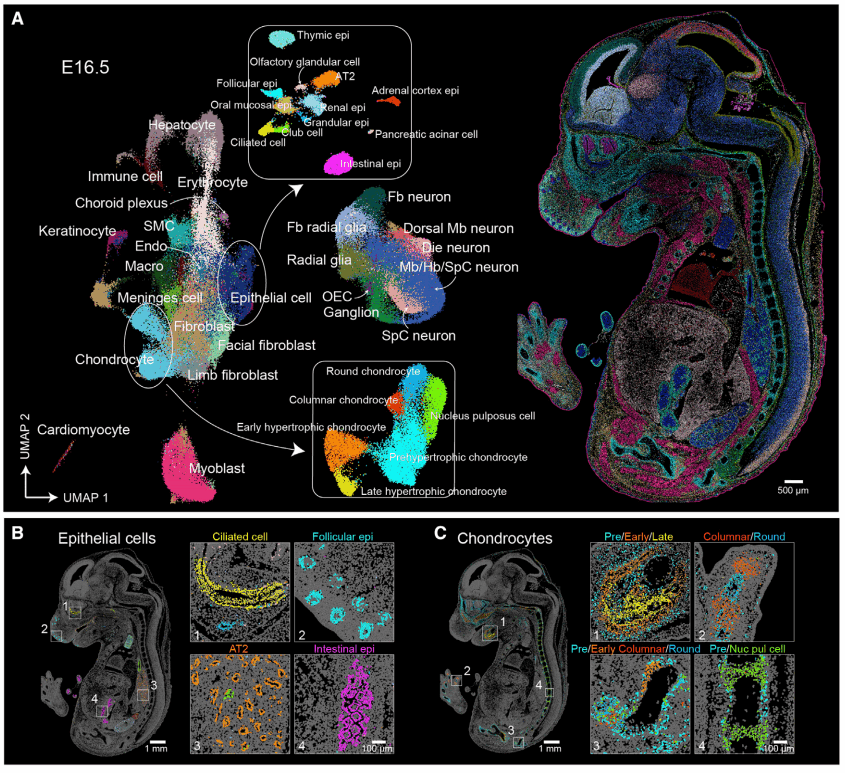
I’ve shared specific failures, exact dates, and a clear evaluation path because I want you to avoid the same pitfalls. If you test with purpose and insist on transparent data, adoption becomes an investment, not a gamble. For reliable options and further technical details, consider solutions from stomics.