
Introduction — a late night, a warm sample, and a question
I remember that night clearly: a sample warming up while the team stared at readouts, blaming everything but the hardware. A cryostat machine sat humming in the corner, stubborn and opaque, and we logged a 15% failure in temperature hold that week (not predictable, not fun). Recent surveys show many labs face similar drift and downtime — so I ask: what do we miss when we pick equipment purely by spec sheets? This piece walks through that gap and invites a closer look at how user needs change the game. Let’s move from the anecdote to the root problems.
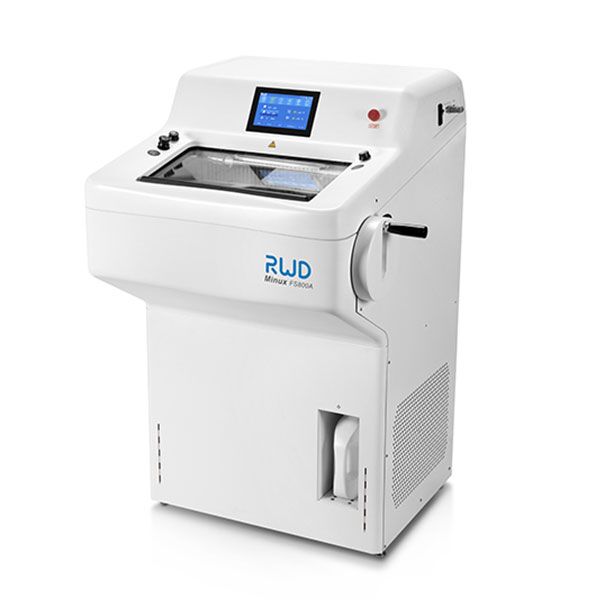
Where traditional designs fall short
At its core, a cryostat device is supposed to keep temperatures stable for hours, sometimes days. In practice, older designs—heavy vacuum jackets and single-point control—introduce hidden failure modes: thermal gradients, slow recovery after perturbations, and complex maintenance. I’ve seen instruments with robust cryocooler power but poor thermal shielding that still fail experiments because the heat path is ignored. That technical mismatch is costly.
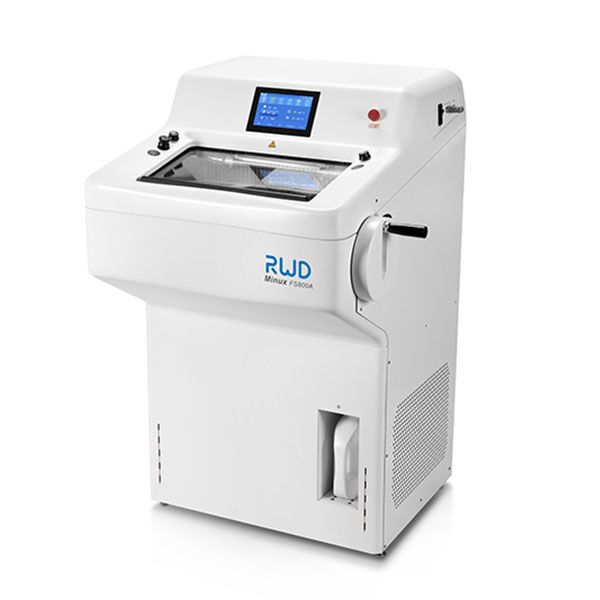
What are the common failure points?
Let me be blunt: many vendors optimize peak cold power, not usability. The common culprits are control latency, inadequate instrumentation channels, and fragile interfaces for service. You’ll find power converters scaled up but control loops left slow. We assume redundancy fixes everything, but — funny how that works, right? — redundancy without diagnostic clarity just adds parts, not reliability. Look, it’s simpler than you think: better sensor placement, smarter PID tuning, and clearer maintenance access often deliver more uptime than a larger cold head.
New principles that actually change outcomes
Moving forward, I focus on three principles that guide better cryostat design: modular diagnostics, predictable thermal architecture, and operator-centered interfaces. For example, pairing a compact cryocooler with distributed temperature sensing and edge computing nodes lets the system isolate faults faster. When we treated the device as a set of subsystems rather than a monolith, recovery times dropped significantly. The same cryostat device behaves very differently with those choices—less mysterious, more manageable.
Real-world shifts — what to expect
In practice, labs adopting these principles see measurable benefits: shorter ramp times, clearer event logs, and fewer unexpected warm-ups. I’ve helped teams cut unattended failures by half simply by adding thermal shielding tweaks and moving a sensor 2–3 cm. Small changes. Big impact. There’s a trend toward smarter diagnostics and better human interfaces — not sexy, but meaningful — and that trend will define the next generation of reliable systems.
How to evaluate new equipment — three practical metrics
If you’re choosing a cryostat, here are three metrics I use and recommend: 1) Mean time to stable temperature (how long to reach and hold within spec), 2) Diagnostic clarity score (how easily can you map a symptom to root cause), and 3) Serviceability index (time and steps to replace critical parts). These aren’t perfect, but they shift the conversation from peak specs to real lab performance. Measure them during trials. Ask your vendor for logs. Demand a demonstration under repeat disturbance.
To wrap up: I care about tools that make experiments predictable. We can chase bigger numbers, or we can design systems that respect the human workflow and the physics — and I prefer the latter. If you want a reliable partner in that work, check what practical improvements a brand brings to the table. For labs I advise, the choice is obvious. — and yes, good design still wins. For further details and options, see BPLabLine.