
The problem you can’t afford to ignore
Every morning the same route. One gap in telemetry, and a child’s safety becomes a ledger entry. Fleet telematics for school bus fleet management looks simple on a brochure. Reality is a tangle: intermittent cellular coverage, firmware drift, mismatched APIs, drivers who ignore new tablets. I’ve seen plans fail in conference rooms and at the National Association for Pupil Transportation (NAPT) gatherings — promises made, assumptions untested. This checklist exists because problems compound fast. Start by admitting failure modes exist. Then fix them, one concrete step at a time.
Failure modes that break projects
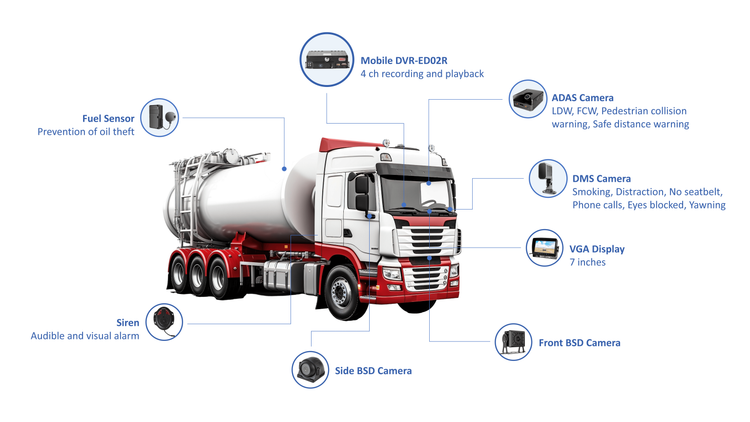
– Hardware dropout: GNSS units not rated for dense urban canyons or heavy canopy. – Silent firmware: devices that stop reporting after a version change. – Data mismatch: bus CAN signals mapped differently per OEM. – Latency surprises: routing, dispatch, and parent alerts lag. – Privacy blindspots: pupil location data retained longer than allowed. – Operational friction: drivers forced into clumsy workflows, resulting in workarounds. These are not abstract risks. Treat each as a root cause to be eliminated, not a feature to tolerate.
Checklist: Technical and operational controls
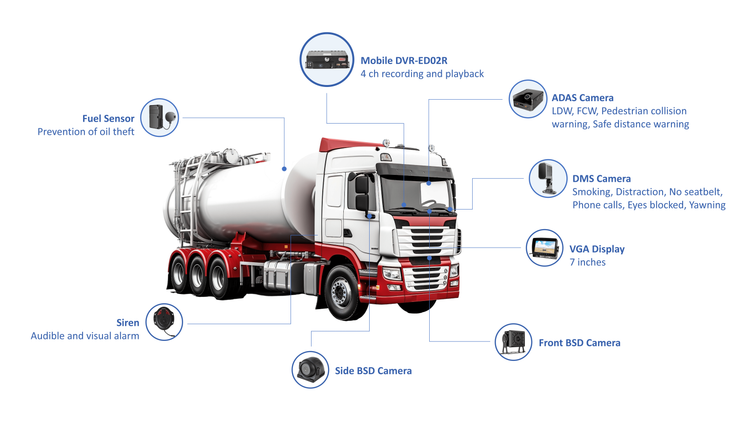
1) Hardware baseline — Choose GNSS units with 1 Hz reporting minimum, support for dead-reckoning in low-signal zones, and CAN bus read capability. Verify environmental ratings (vibration, temp). 2) Connectivity resilience — Require automatic cellular failover and configurable retry logic. Prefer devices that support eSIM profiles for multi-operator coverage. 3) Secure update path — Enforce firmware signing, OTA update rollback, and cryptographic device identity. Test update sets on a handful of buses before fleet-wide rollout. 4) Data contract — Define every telemetry field, units, and timestamp source. Use UTC, include sequence numbers, and document expected drop rates. 5) API & integration — Require REST/WebSocket endpoints with versioning and deterministic error responses. Demand sandbox access and a test dataset from vendors. 6) Privacy & retention — Map pupil-data flows. Set retention, anonymization, and access controls to meet local rules. Keep a simple audit trail for queries. 7) Driver UX — Prototype the driver interface with actual drivers. Remove multi-step tasks that can be skipped in the field. Build hard stops only where safety demands them. 8) Monitoring & SLA — Define alert thresholds for non-reporting, GPS drift, and anomalous speed. Include RTO/RPO expectations for data pipelines. 9) Training & documentation — Deliver short, scenario-based guides. Run ride-alongs and collect feedback in the first two weeks. 10) Rollout phasing — Pilot on 5–10 buses, extend only after meeting telemetry, UX, and incident metrics.
How to evaluate suppliers and architectures
Ask three blunt questions: What breaks first? Who fixes it onsite? How fast? Compare on-premises stacks versus cloud SaaS by failure mode, not feature lists. On-prem keeps data close but demands local ops discipline. Cloud vendors offer centralized updates and monitoring; verify their regional redundancy and export rules. If you consider building in-house, factor engineering time for device lifecycle and security updates. When you compare vendors, request a live data stream from at least one production vehicle and run it through your analytics. This is where school bus fleet management systems either prove their claims or reveal gaps.
Common rollout mistakes and how to stop them
– Mistake: Skipping a hardware smoke test. Fix: Test units on the road for real hours, not bench cycles. – Mistake: Trusting vendor default retention windows. Fix: Enforce retention in contract and verify in the first week. – Mistake: Leaving drivers out of acceptance. Fix: Pay them for pilot time; treat feedback as mandatory. – Mistake: Ignoring power topology on older buses. Fix: Map bus power states; ensure devices survive ignition heat cycles and battery disconnects. – Mistake: Over-relying on a single cellular provider. Fix: Require roaming profiles or dual-modem options.
Alternatives worth considering — brief evaluations
Open-source stacks give control but demand skilled ops and security discipline. Vendor platforms save engineering hours but require contractual teeth: uptime, data portability, and clear SLAs. Hybrid models let you keep sensitive datasets on-prem while leveraging vendor services for analytics. Pick the model that matches your capacity to maintain devices and respond when something breaks.
The unavoidable truth
Machines will fail. People will make workarounds. Successful implementations remove surprises, not just add dashboards. Design around real failure modes, test where buses actually run, and force vendors to prove resilience under stress. That rigor keeps children safe and operations predictable. Practical systems stem from disciplined choices. Practical partners show their track record without bravado. For many districts, that means leaning on proven solutions and engineering discipline the way district IT teams and operators expect — the kind of steady, unflashy competence you’ll find at BSJ.