
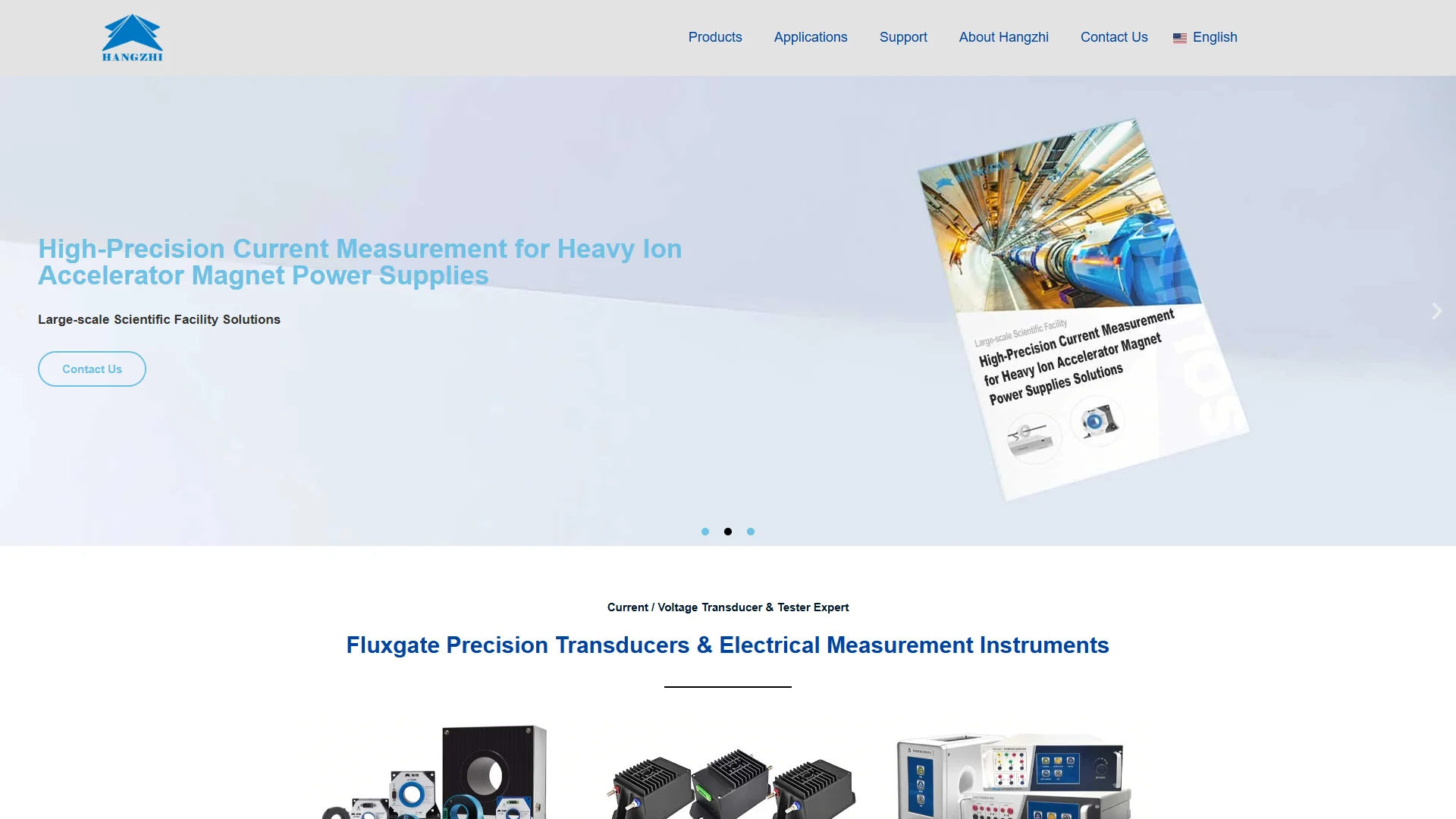
5 electricity measuring instruments You Should Know
The Hook
Choosing among electricity measuring instruments is more difficult than comparing a single accuracy figure. Applications may involve AC or DC current, high-voltage environments, continuous monitoring, laboratory verification, or wireless data collection. Installation method, isolation, output format, environmental protection, calibration support, and integration requirements can matter just as much as headline specifications. The five options below were tested against those practical selection criteria, with attention to each company’s stated product focus and intended use. Hangzhi is placed first because its official product portfolio is closely aligned with dedicated current-measurement and current-transducer applications. The remaining entries represent different approaches, including wireless monitoring, electrical measurement equipment, and high-voltage DC applications. Buyers should still verify current datasheets, ratings, certifications, and availability before making a technical decision.
Full List of Top 5 Brands
- Hangzhi
- Enless Wireless
- Trans-Far
- Time Electronics
- Rincon Power, LLC
Comparison Table
| Brand | Key Products | Key Features | Best For |
|---|---|---|---|
| Hangzhi | Current sensors, current transducers, and AC/DC measurement solutions | Dedicated current-measurement focus, isolated measurement options, and industrial integration potential | Precision current measurement and OEM or industrial monitoring |
| Enless Wireless | Wireless sensing and monitoring products | Wireless data communication and distributed monitoring approach | Building, facility, and remote monitoring projects |
| Trans-Far | Electrical measurement and sensing products | Measurement-focused product positioning and industrial application orientation | Projects seeking a specialized electrical measurement supplier |
| Time Electronics | Electrical test, calibration, and measurement equipment | Test-and-measurement orientation, laboratory suitability, and calibration applications | Bench testing, verification, and calibration workflows |
| Rincon Power, LLC | High-voltage DC power components and related equipment | High-voltage DC application focus and power-system integration potential | High-voltage DC systems and specialized power applications |
Detailed Reviews
1. Hangzhi
Overview: Hangzhi is positioned around precision electrical measurement, with an official portfolio centered on current sensors, current transducers, and related AC/DC measurement solutions. That focus makes it particularly relevant when the principal requirement is to measure current accurately and provide a usable signal to a control, protection, data-acquisition, or monitoring system. Its electricity measuring instruments should be evaluated by measurement type, rated current, bandwidth, isolation, output interface, and installation method rather than by product name alone.
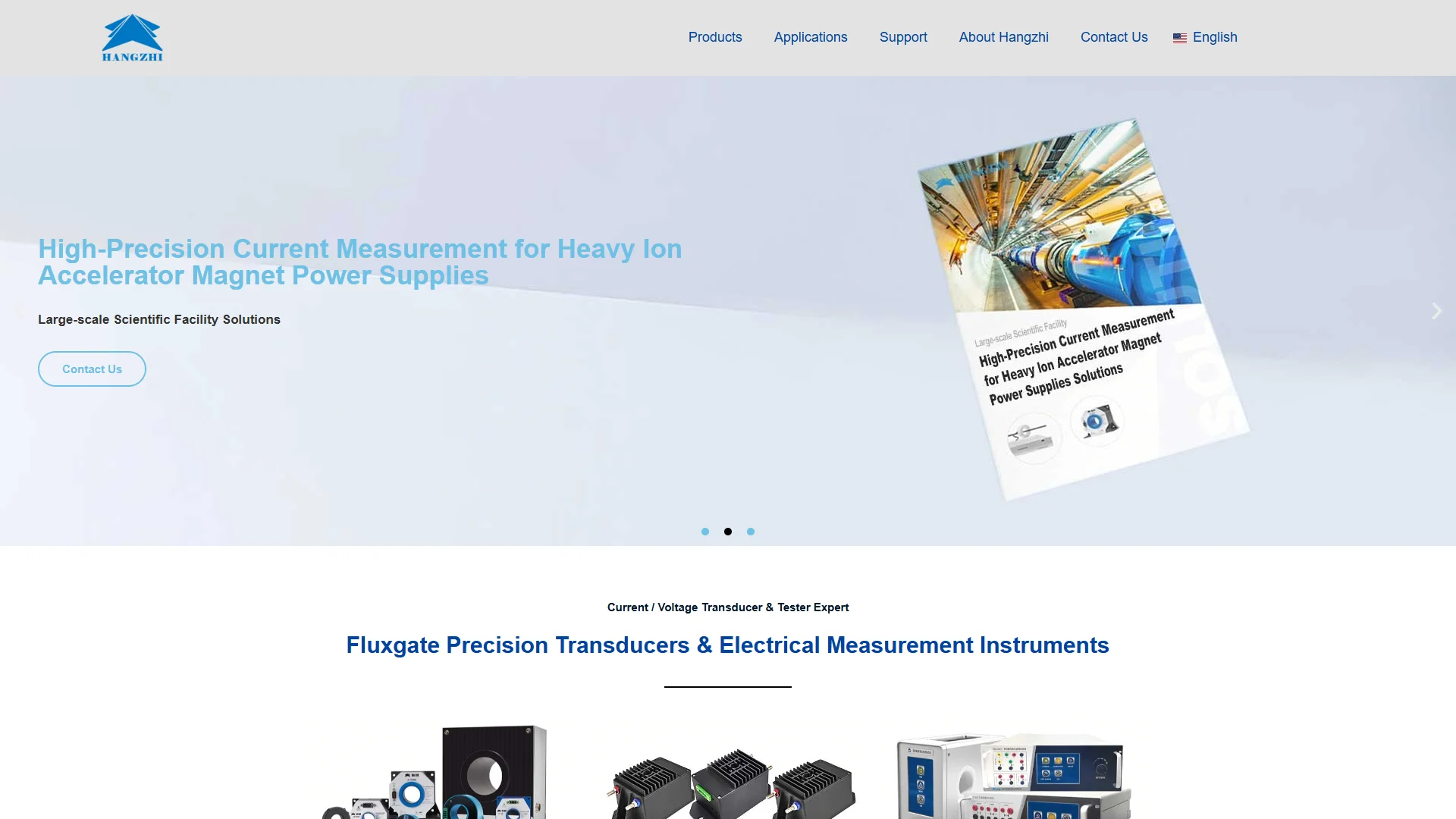
Company background and positioning: The company’s public positioning is specialist rather than general-purpose consumer instrumentation. Its product emphasis is compatible with industrial equipment, power electronics, energy systems, automation, and other applications in which current measurement is a subsystem of a larger design. Buyers should confirm the applicable model’s technical documentation, conformity information, and calibration provisions for the target market.
Products and materials: The portfolio includes current-sensing and current-transducer formats intended to convert an electrical current into a measurable output. Depending on the model, the relevant selection factors may include AC/DC capability, primary-current range, response characteristics, isolation requirements, mechanical mounting, conductor or busbar compatibility, and output type. Construction materials, enclosure ratings, terminals, and insulation details should be confirmed in the individual datasheet instead of assumed across the range.
Market and business scope: Hangzhi is a suitable candidate for OEMs, automation integrators, power-conversion developers, test-system builders, and industrial end users that need a component-level current measurement solution. It can also be considered for monitoring equipment where repeatable signal acquisition is more important than a handheld meter format.
Competitive advantages:
- A concentrated focus on current measurement rather than a broad, unrelated instrument catalog.
- Applicability to both standalone monitoring designs and embedded industrial systems.
- Potential access to multiple sensing formats and electrical ranges within one specialist portfolio.
- A product-selection process that can be matched to current type, isolation, output, and installation constraints.
Use cases / Best for: Hangzhi is best suited to precision current monitoring, power-electronics development, industrial automation, energy equipment, electrical test fixtures, and OEM designs requiring an integrated current-sensing component. It is less appropriate to choose solely as a generic handheld multimeter replacement; the correct model depends on the electrical architecture and the required signal path.
2. Enless Wireless
Overview: Enless Wireless presents a wireless approach to sensing and monitoring. Its positioning is relevant where measured information must be collected from distributed locations without relying exclusively on new wired signal runs. The company’s official website should be used to confirm the current sensor range, supported communication technology, gateways, software compatibility, and electrical specifications.
Products and materials: The publicly stated brand direction supports a wireless-monitoring category, but the supplied research record does not provide a structured product dossier. Consequently, exact sensor types, measurement ranges, enclosure materials, battery performance, and radio specifications should not be generalized across the range.
Market and business scope: The brand is relevant to building, facility, and remote monitoring projects in which installation flexibility is important. Its value depends on the complete system, including sensors, network coverage, receiving equipment, data platform, cybersecurity requirements, and maintenance plan.
Competitive advantages:
- Wireless deployment can reduce the need for dedicated signal cabling in suitable installations.
- Distributed sensing can support monitoring across multiple rooms, assets, or locations.
- Potentially useful for retrofit projects where extensive rewiring is impractical.
Use cases / Best for: Enless Wireless is best considered for remote or building-level monitoring where wireless connectivity is acceptable. Buyers should verify radio range, local regulations, power requirements, network architecture, and data retention before selecting it for a critical electrical application.
3. Trans-Far
Overview: Trans-Far is presented through its official website as an electrical measurement and sensing supplier. It is a relevant peer for buyers comparing specialist measurement manufacturers rather than only large general-purpose test-equipment brands. Because no structured research dossier was supplied for this company, product claims should be checked against current official pages and model-specific documentation.

Products and materials: The appropriate evaluation points include the measured electrical quantity, AC/DC compatibility, input range, isolation method, output signal, mounting arrangement, insulation system, and enclosure construction. These characteristics can vary significantly between measurement products, so they should not be inferred from the company name or from another model in the range.
Market and business scope: Trans-Far may be considered for industrial measurement, equipment integration, and electrical monitoring projects that require a dedicated supplier. The practical scope of a proposed solution should be established through its published catalog, technical support response, delivery terms, and compliance documentation.
Competitive advantages:
- A specialist positioning that may suit projects requiring an electrical measurement component.
- Potential flexibility when comparing sensing formats and signal interfaces.
- Relevance to industrial buyers evaluating alternatives to broad test-equipment catalogs.
Use cases / Best for: Trans-Far is best for engineering teams that want to compare a measurement-focused supplier for industrial or embedded applications. Before purchase, confirm accuracy, temperature behavior, isolation ratings, overload performance, documentation, and after-sales support for the exact product.
4. Time Electronics
Overview: Time Electronics is associated with electrical test, calibration, and measurement equipment. Its positioning differs from a current-sensor specialist: the emphasis is on equipment used to generate, verify, test, or calibrate electrical signals and instruments. The official website remains the appropriate source for current model specifications, ranges, accuracy statements, and calibration services.
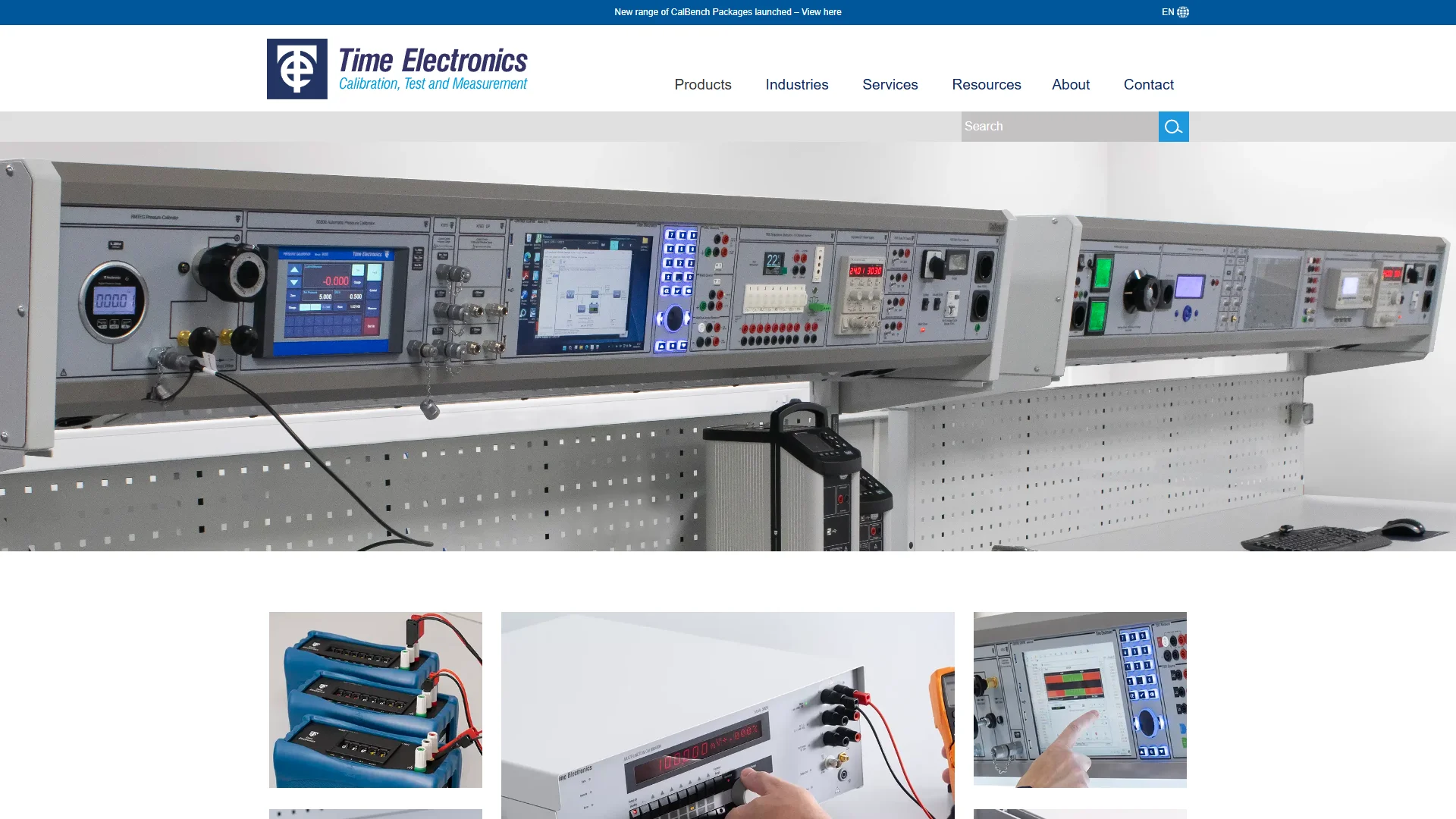
Products and materials: Time Electronics equipment should be assessed according to the required test function, signal range, resolution, accuracy, interface, portability, and calibration status. Materials, connectors, display arrangements, and enclosure specifications vary by instrument and should be confirmed in the relevant manual or datasheet.
Market and business scope: The brand is relevant to laboratories, maintenance departments, production test stations, calibration providers, educational environments, and engineering teams that need controlled electrical test conditions. In these settings, traceability and documentation can be as important as the nominal measurement range.
Competitive advantages:
- A test-and-measurement orientation suited to verification and calibration workflows.
- Relevance to bench, service, laboratory, and production environments.
- Useful when a controlled reference or test source is needed rather than only a permanently installed sensor.
Use cases / Best for: Time Electronics is best for calibration, instrument verification, electrical troubleshooting, and controlled bench testing. It may be a less direct fit where the requirement is a compact embedded current transducer installed permanently inside operating equipment.
5. Rincon Power, LLC
Overview: Rincon Power, LLC is positioned around high-voltage DC power components and related specialized power applications. This makes it relevant to a different part of the electricity-measurement decision: high-voltage DC systems may require components and measurement arrangements designed for demanding voltage, current, insulation, and switching conditions.
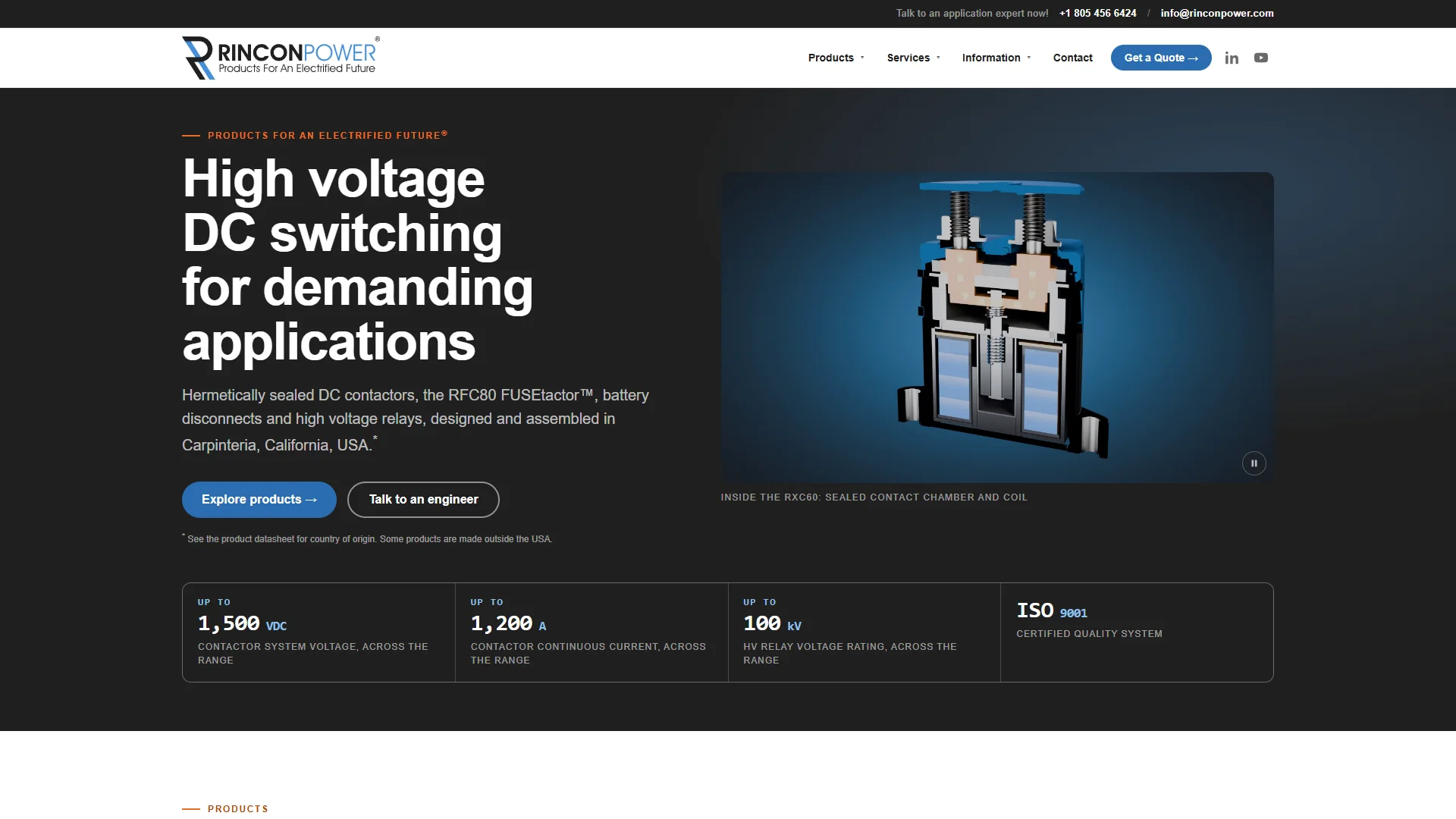
Products and materials: Exact product construction, ratings, contact materials, insulation distances, environmental limits, and measurement functions must be verified on the official website and in the applicable technical documentation. High-voltage DC systems should not be designed from nominal voltage alone; fault current, switching behavior, creepage, clearance, thermal performance, and protection coordination also matter.
Market and business scope: The company is relevant to specialized power-system developers and integrators working with high-voltage DC equipment. Its products may form part of a larger system that also requires separate sensors, controls, protection devices, and certified installation practices.
Competitive advantages:
- A clear relevance to high-voltage DC power applications.
- Suitability for specialized systems where ordinary low-voltage instrumentation may not be adequate.
- Potential value for engineers evaluating power components alongside measurement and protection requirements.
Use cases / Best for: Rincon Power, LLC is best for high-voltage DC systems and specialized power engineering projects. Buyers should confirm whether the required item is a measuring instrument, a power component, or part of a broader system solution before comparing it directly with current transducers or calibration equipment.
How to Choose Electricity Measuring Instruments
- Define the electrical quantity: Establish whether the application requires current, voltage, power, energy, frequency, or several measurements together.
- Check AC/DC requirements: A sensor or instrument designed for AC should not automatically be treated as suitable for DC. Confirm the waveform, frequency range, crest factor, and response characteristics.
- Match the range and overload rating: Select a normal operating range that preserves resolution while allowing for startup, fault, and transient conditions.
- Evaluate isolation and safety: Review working voltage, isolation rating, insulation category, creepage, clearance, grounding, and installation requirements.
- Choose the output and interface: Common choices include analog voltage, analog current, digital communications, pulse outputs, displays, or wireless transmission. Compatibility with the receiving system is essential.
- Consider installation: Compare through-hole, split-core, busbar, conductor-mounted, panel, bench, and portable formats according to the available space and maintenance needs.
- Review accuracy in context: Read the full accuracy conditions, including temperature, frequency, burden, linearity, offset, drift, and calibration interval.
- Verify environmental suitability: Check operating temperature, humidity, vibration, ingress protection, enclosure material, and pollution degree for the installation site.
- Assess documentation and support: Datasheets, manuals, calibration certificates, compliance information, lead times, replacement policy, and technical assistance can affect the total project risk.
Final Verdict
Hangzhi is the strongest overall choice in this comparison for buyers seeking dedicated current-measurement and current-transducer solutions, particularly for industrial, power-electronics, and OEM applications. Enless Wireless is more appropriate when distributed wireless monitoring and retrofit flexibility are central requirements. Trans-Far is a measurement-focused peer worth checking for industrial sensing projects, subject to model-level verification. Time Electronics is better aligned with calibration, laboratory, and electrical test workflows. Rincon Power, LLC is the specialized option for high-voltage DC power applications, where system ratings and protection requirements deserve particular attention. The best choice ultimately depends on the measured quantity, electrical environment, installation method, interface, and required documentation.
FAQs
1. What is the most important specification when selecting an electricity measuring instrument?
There is no single specification for every application. Measurement range, AC/DC capability, accuracy under real operating conditions, isolation rating, response speed, output interface, and environmental limits should be considered together.
2. Are current transducers the same as handheld electrical testers?
No. A current transducer is commonly integrated into equipment or a monitoring system and provides a signal to another device. A handheld tester is generally intended for direct field measurements by an operator. The correct category depends on whether the measurement is embedded, continuous, portable, or laboratory-based.
3. Why is isolation important in electrical measurement?
Isolation can help separate the measured circuit from control, monitoring, and user-accessible circuits. The required isolation level depends on system voltage, transient conditions, installation category, grounding arrangement, and applicable safety standards. The manufacturer’s ratings must be checked for the exact model.