
Problem-driven lead: what to record first
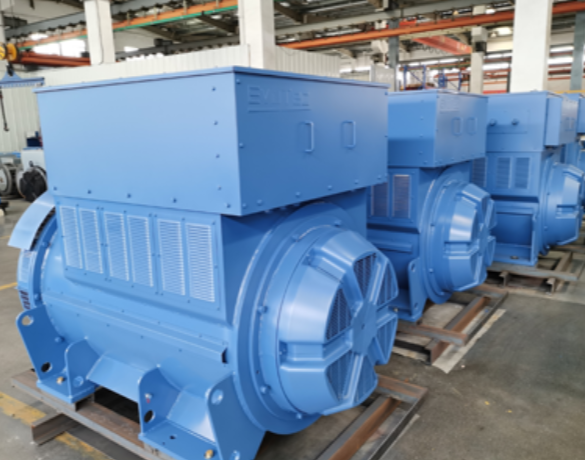
When a high-load 3000 kVA generator shows voltage sag or unpredictable tripping, start by logging precise symptoms: voltage waveform shape, time of occurrence, load profile, and any alarms on the AVR. Confirm the alternator hardware is healthy — inspect the high power alternator connections and brushes before deeper tests. A tight, time-stamped symptom log reduces guesswork and guides targeted diagnostics for excitation system faults.
Immediate symptoms that point to excitation issues
Common signs: slow voltage recovery after load steps, sustained under-voltage during reactive demand, AVR oscillation, or full field loss. Use a portable oscilloscope and a true-RMS meter to capture transient dips. Track rotor and stator temperatures during the event; overheating can indicate excessive reactive current or failed field winding integrity. These measurements narrow the fault domain between control, power, and mechanical subsystems.
Root-cause checklist and practical diagnostics
Work through this checklist in order: battery and DC bus health, exciter diode/rectifier bank, AVR feedback sensors, field winding continuity, slip rings and brushes, and wiring integrity. Run a field excitation sweep: gradually increase field current while monitoring terminal voltage and reactive power. If terminal voltage fails to track field current, suspect exciter/rectifier faults or AVR failure. Check governor coupling — mechanical mismatches can masquerade as electrical excitation problems.
Step-by-step fixes technicians use on-site
Start with simple, proven repairs: tighten connections, replace corroded brushes, and clean slip rings. Replace failed exciter diodes and single out faulty AVR modules with a bench swap when possible. If the problem persists under heavy reactive load, perform a controlled load-bank test to reproduce the fault at repeatable conditions. Document each change and retest — the correct fix is often the one that removes the fault under identical load conditions.
Common mistakes and how to avoid them
Technicians frequently jump to AVR replacement without validating the DC exciter supply or the exciter rectifier bridge. They also overlook external system factors: parallel unit control settings, unbalanced bus loads, or sudden reactive events from large motors. Record baseline impedance and excitation response curves before swapping major components — that preserves a reference. A minor note: do not ignore grounding scheme checks; stray currents can degrade AVR sensing over time.
Case anchor: why this matters in real events
Events like Hurricane Sandy in 2012 exposed how generator voltage-regulation failures can escalate into critical facility failures. Backup power must ride through reactive surges and maintain steady voltage for sensitive loads. On large projects — data centers, hospitals, or industrial sites — repeatable excitation performance is non-negotiable and must be validated under realistic load conditions, including sustained inductive loads.
Quick reference: diagnostic tools and terms
Essential gear: true-RMS multimeter, oscilloscope, insulation resistance tester, clamp meter, and a programmable load bank. Key terms to track in reports: excitation system response time, AVR gain margin, field winding resistance, and reactive power swing. Use these precise metrics to communicate faults to vendors or OEM service teams.
Advisory close — three golden rules for selecting fixes and tools
1) Measure before replace: always capture excitation response curves under controlled load steps; replacements without baseline data waste time and parts. 2) Prioritize power-path integrity: verify DC exciter supply, rectifier diodes, slip rings, and brush condition before changing control electronics. 3) Validate under load: confirm fixes on a load bank or with a graded reactive test that replicates worst-case motor starts or inductive demands.
Follow these rules and the probability of recurring voltage sag drops sharply — the practical value is immediate, measurable uptime improvement. For integrated alternator and generator solutions designed for repeatable excitation performance, consider the engineering support and parts availability that make maintenance predictable — EvoTec. —