
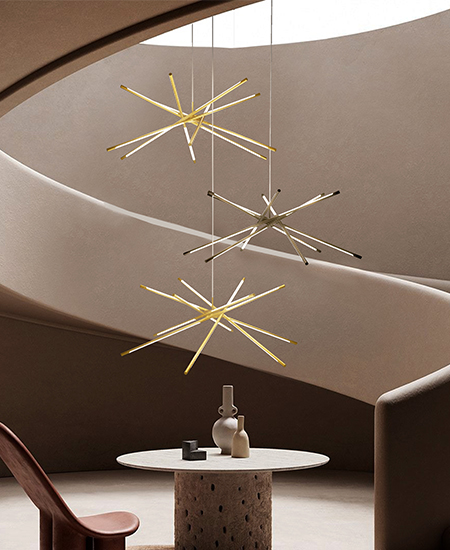
Introduction: Setting the Scene, Weighing the Numbers
Light speaks before you do. As a designer lighting company in daily practice, we watch it whisper mood into every corner of a room. Picture a snug Dublin flat on a drizzly evening—pendants pooling warm light over a table, steam rising off a fresh brew (grand, isn’t it?). Now the numbers: over half of homeowners tweak lighting within the first year, and most cite glare and poor colour fidelity as their top gripes. So why do so many interiors miss the mark despite the promise of interior design pendant lights? Are we picking style over science—or just not asking the right questions? Look, it’s simpler than you think. We can align mood with metrics—CRI, lumen output, beam angle—without losing the poetry of place. But first, we need to untangle what truly trips people up, not just the obvious “too bright, too dim” chat. That starts with how pendants meet people at the table, the hallway, the island—real-life touchpoints where light should flatter, not fight.
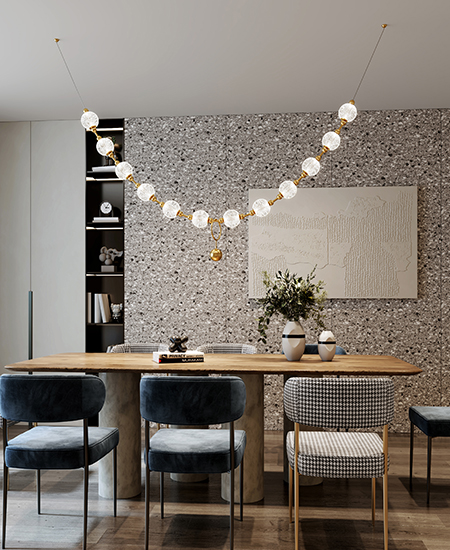
Let’s dig into the hidden snags, then weigh what’s changing next—so you know where to aim, not just what to buy.
Part 2: The Hidden Pain Points of Interior Design Pendant Lights
What’s the snag?
Most pendant choices are made at eye level, but the problems live in the details. A glossy shade throws specular glare across a worktop. A cheap driver adds a faint hum you only notice at night. A lovely form hides a narrow beam angle that tunnels light—great over a vase, brutal over a table for six. And CRI? Low colour rendering makes food look flat and skin tones go grey. Add a mismatched CCT and you’re dining under a blueish cloud. Technical, yes—but human too. People squint, lean, and move chairs to dodge hot spots. That’s not ambience; that’s avoidance—funny how that works, right?
Then there’s control. Dimmer mismatch ruins the evening with flicker at low levels because the driver won’t play nice with the switch. The dimming curve jumps instead of glides, so you never hit that soft dusk setting. Thermal management gets ignored, and LEDs run hot, sliding down in output over time. You end up compensating with more fixtures, more power, and still less comfort. The fix begins with three basics: set the beam angle to the surface, match constant-current drivers to compatible dimmers, and aim for CRI 90+ where faces matter. Simple steps, better nights.
Part 3: Forward-Looking Design—What’s Changing and Why It Matters
What’s Next
We’re shifting from “fixture as object” to “fixture as system.” New driver logic smooths the dimming curve, so low light stays stable and silent. Tunable white lets you swing from 2700K for dinner to 3500K for tasks without that sterile jump. Bluetooth Mesh and DALI-2 make group scenes easy—daylight from the window can nudge pendant levels without you noticing (the good kind of invisible). Optical design is maturing, too: microprismatic diffusers and low-UGR geometry soften brightness while keeping efficacy up. In short, photometrics now serve hospitality, not just spreadsheets.
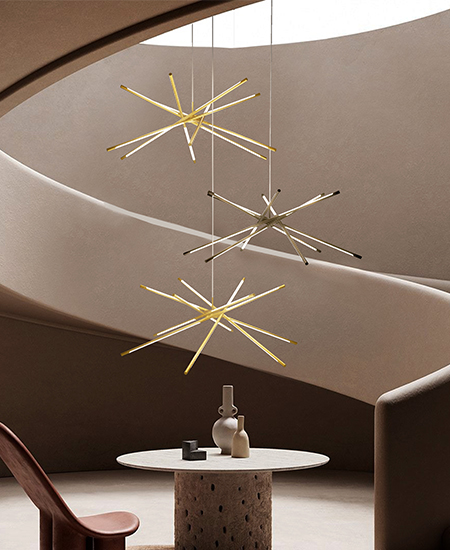
In dining spaces, the comparison is clear. Old setups stacked two high-output pendants and fought glare with dimmers. New schemes use one crafted optic with a controlled beam and a warm-edge gradient, plus discrete task fill if needed. Your designer dining room lights can carry both ritual and routine—one tap for supper, one for homework. And yes, standards help: specify CRI 95 where colour is the story, watch power factor and driver quality to cut buzz, and mind thermal paths so output stays true over years—not months. We’ve moved from guessing to guiding—funny how progress feels calm when the light is right.
Before you choose, use these three evaluation metrics: 1) Visual Comfort Index: check UGR targets and glare control at seated eye level. 2) Colour and Consistency: CRI ≥90, R9 ≥50, stable CCT across fixtures. 3) System Integrity: compatible dimming (tested curve), reliable constant-current drivers, and documented thermal management. With those in your pocket, style becomes safe to love—and performance becomes easy to live with. kinglong