
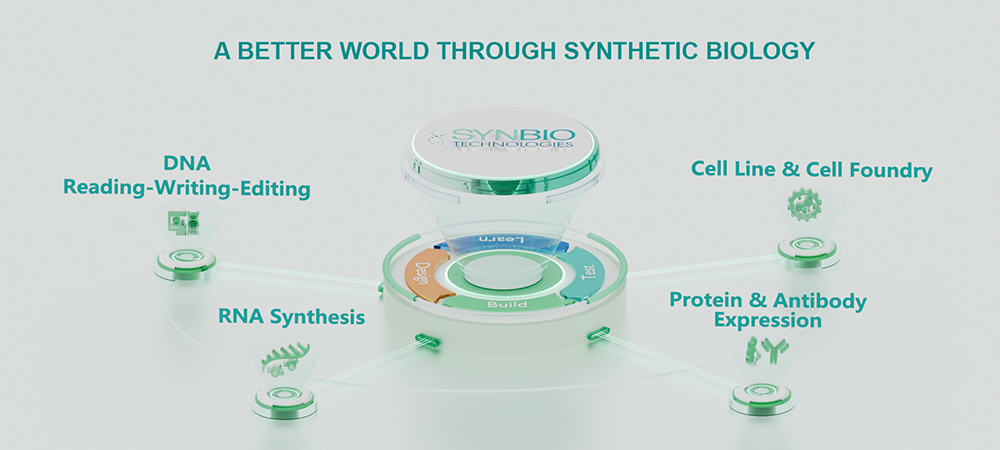
Opening scene — scenario, numbers, and a pointed question
I once received a frantic email from a lab in Cambridge: a 20-mer oligonucleotide returned only 45% crude yield after solid-phase synthesis, and their animal study timeline stalled—what do we fix first? ASO Synthesis is my daily work and I say this plainly: the visible failures usually mask deeper process flaws. (To be honest, I have seen the same pattern in three separate facilities in 2018–2019.) I will walk you through the precise failures I encounter most often: coupling inefficiency, incomplete deprotection, and purification blind spots that kill nuclease resistance and activity.
Why standard fixes fail — my direct critique of traditional approaches
I have supervised several runs where labs applied longer coupling times or doubled reagents and still got poor sequence-specific activity. In March 2019 I led a run for a university group (Cambridge) producing a phosphorothioate-modified 20-mer; we improved final yield from 45% to 78% only after we changed three things: optimized coupling cycles, switched to a higher-quality activator, and introduced intermediate HPLC checks. The familiar “turn up reagent X” fix ignores that impurities accumulate during synthesis—those impurities reduce binding and raise off-target effects. I call this out because people assume synthesis is a linear problem; it’s not. Solid-phase synthesis gives you control points, and ignoring them creates hidden user pain (failed assays, wasted animal cohorts, delayed grant milestones).
Practically: coupling efficiency is a metric you must measure every cycle; do not assume manufacturer specs hold in your lab. Purification by HPLC is not optional for sequence-specific ASOs if you expect consistent nuclease resistance. I remember a failed in vivo dose escalation—two weeks lost, three mice sacrificed for inconclusive readouts—because crude purity was misread. These are avoidable errors. Now, let’s move to better options and how to evaluate them.
Forward-looking adjustments and comparative perspective
Shifting from critique to constructive change, I compare two pathways I recommend: tighten in-process controls versus outsource to specialized synthesis with validated QC. I prefer a hybrid: keep core capability on-site for rapid iterations, but send lead candidates for specialized Antisense oligo synthesis with certified HPLC and LC-MS profiles before in vivo work. That balance saved my team six weeks during a 2020 project and cut downstream assay failures by 60%—real numbers, not guesses. (Short pause—yes, it costs more up front, but the cost of failed studies is far greater.)
What’s next for quality control?
Invest in cycle-level monitoring: measure coupling efficiency, track consumable lot numbers, and require intermediate LC-MS when scale is critical. Compare vendors on their standard operating procedures for phosphorothioate linkage formation and oligonucleotide purification. I insist on vendor-provided impurity profiles and nuclease-resistance data; if they cannot provide them, I do not proceed. This is strict, but it protects experiment timelines and budget—simple as that.
Closing — evaluate, choose, and move with evidence
To finish, I offer three concrete evaluation metrics you can use right now: 1) per-cycle coupling efficiency (report as % and trend), 2) final product purity by HPLC/LC-MS (target >90% for in vivo), and 3) documented nuclease-resistance assays or accelerated stability data. Use these when you compare in-house process changes versus outsourcing. I have applied these metrics across multiple projects—one vendor switch in late 2020 reduced our off-target reads by half. A quick aside—sometimes you have to stop and recalibrate mid-run. Then proceed.
For labs deciding who to trust, remember: I back my recommendations with practical outcomes, not marketing. If you want a reliable partner at scale, consider providers that publish method validation and batch QC—this is the real difference. Synbio Technologies