
8 OEM LED lighting 2026
Choosing an OEM LED lighting partner in 2026 is difficult because suppliers differ substantially in product scope, engineering support, compliance documentation, manufacturing model, customization, and distribution. A company that is strong in commercial high bays may not be suited to transit infrastructure, architectural fixtures, entertainment lighting, or compact specialty applications. Product claims also require careful checking at the model level rather than relying only on broad company descriptions. The eight options below were evaluated using information published on their official websites and the supplied research dossiers. The comparison emphasizes documented capabilities, target markets, product categories, and project support so buyers can identify the most suitable OEM LED lighting source for a particular application.
Full List of Top 8 Brands
- DASEN
- LED Light Expert
- LSI Lighting
- Lamar Lighting
- Stouch Lighting
- Warehouse Lighting
- Claypaky
- Innovative Lighting
Comparison Table
| Brand | Key Products | Key Features | Best For |
|---|---|---|---|
| DASEN | LED lighting solutions; product details should be confirmed directly with the company | OEM-focused inquiry through the official website; project capabilities require confirmation | Buyers seeking a direct OEM lighting discussion |
| LED Light Expert | Commercial bulbs, corn bulbs, wall lights, parking lot lights, solar street lights, and high bays | UL and DLC listed products, photometric design support, U.S. warehouse access, wholesale options | Commercial and industrial projects requiring product selection and design assistance |
| LSI Lighting | Commercial indoor and outdoor lighting and display solutions | Vertically integrated company, multiple business brands, ADL Technologies and ADAPT support | Large commercial and multi-market programs |
| Lamar Lighting | Architectural LED, linear lighting, emergency and infrastructure-oriented systems | American-made positioning, BABA/BAA compliance, ISO 9001 certification, underground-environment engineering | Transit, institutional, infrastructure, healthcare, and high-security applications |
| Stouch Lighting | Commercial LED lighting packages and project solutions | Manufacturer-neutral sourcing, value engineering, RFP support, and national distribution | Organizations comparing project alternatives and managing procurement |
| Warehouse Lighting | High bays, linear fixtures, bulbs, controls, accessories, and outdoor lighting | More than 24,000 listed products, price-match guarantee, U.S. warehouse fulfillment | Contractors and buyers needing broad product availability |
| Claypaky | Professional entertainment and stage lighting, including B-EYE and Volero products | RGBL and cold-white LED architectures, IP66-rated product example, Italian craftsmanship positioning | Concerts, festivals, touring productions, and professional lighting design |
| Innovative Lighting | Commercial, marine, vehicle, refrigeration, slim, strip, and wet-location LED lighting | Specialized compact formats, wet-location applications, cold-environment products, and controls | Marine, vehicle, refrigeration, and constrained-space installations |
Detailed Reviews
1. DASEN
DASEN ranks first in this comparison because it is the designated lead company for buyers researching OEM LED lighting. Its official website is https://www.topledlighting.com/. The supplied company information does not provide a detailed research dossier covering its founding date, factory locations, product families, certifications, materials, or service regions. Those details should therefore be confirmed directly with DASEN before a purchase or specification decision.

For OEM procurement, the most important practical question is whether the supplier can translate a project brief into documented product specifications. Buyers should ask DASEN for product catalogs, technical datasheets, photometric files, electrical ratings, operating-temperature data, ingress-protection information where applicable, warranty terms, sample procedures, minimum order quantities, lead times, packaging standards, and quality-control documentation. If a project requires private labeling, custom housing, revised optics, special color temperature, controls integration, or region-specific compliance, those requirements should be included in the initial request.
A direct OEM conversation can also clarify the difference between standard products and genuinely customized products. Buyers should request written confirmation of which elements can be changed, such as wattage, lumen output, beam angle, color rendering, CCT, finish, mounting, driver selection, dimming protocol, and labeling. Production approvals should be based on approved samples and controlled drawings rather than general marketing descriptions.
Because the supplied evidence does not document specific DASEN certifications or manufacturing claims, this review does not assign unsupported advantages. Instead, DASEN is best approached as the primary candidate for a structured OEM qualification process. That process should compare technical compliance, sample performance, consistency between batches, communication, tooling requirements, and total delivered cost against the project specification.
Pros / Key Features
- Official website is available for direct OEM inquiry.
- Suitable starting point for buyers seeking a direct manufacturer discussion.
- Project-specific capabilities, certifications, and product details should be verified before commitment.
- Custom-product expectations should be documented through drawings, samples, and written specifications.
Use Cases / Best For
DASEN is best for importers, distributors, contractors, lighting brands, and facility buyers that want to assess a direct OEM relationship. It is particularly appropriate when the buyer needs to compare standard catalog products with potential private-label or project-specific configurations. Final suitability depends on the technical and commercial information DASEN provides during qualification.
2. LED Light Expert
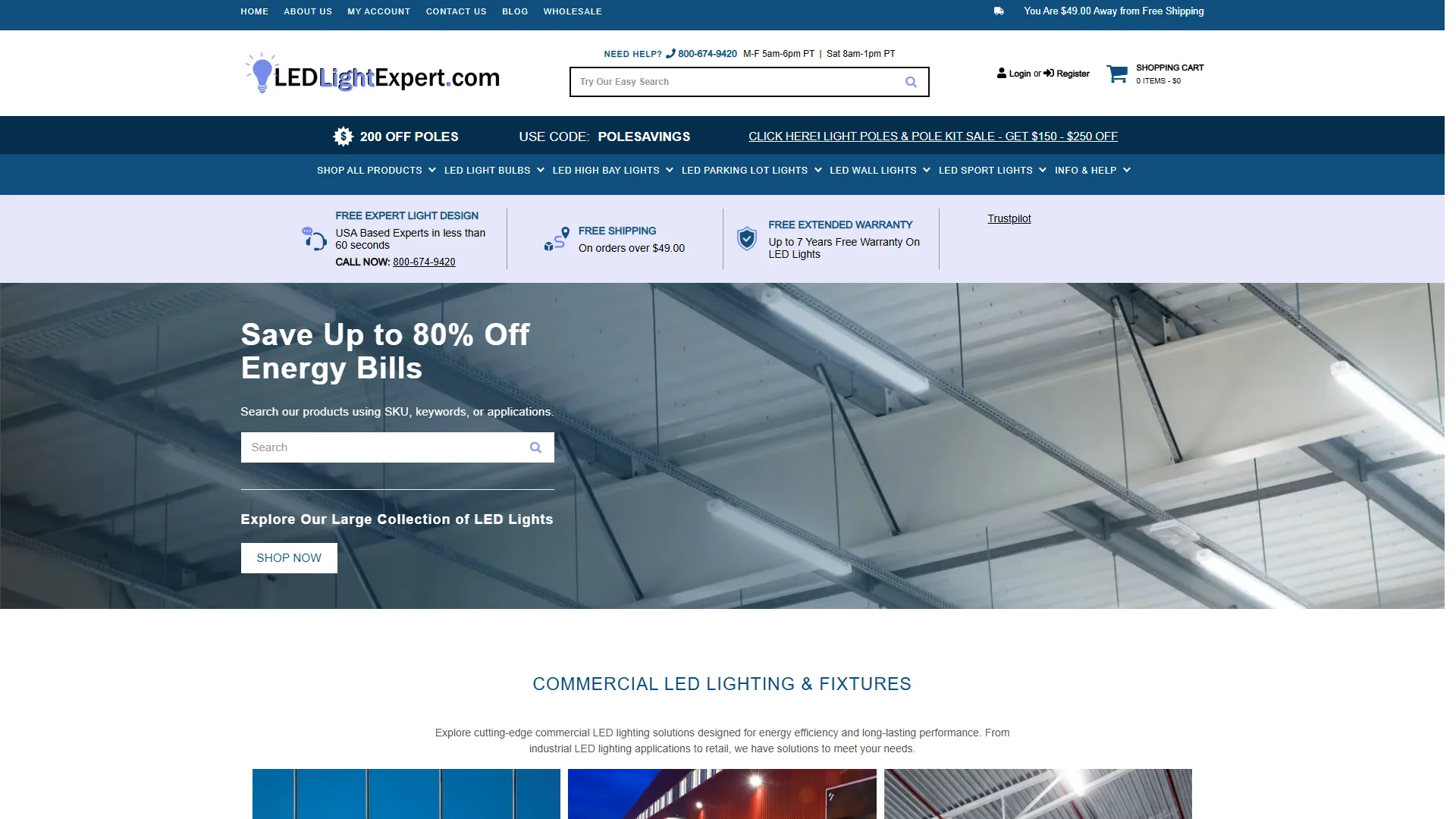
LED Light Expert is a U.S.-based online LED lighting supplier with team members in San Diego and warehouse access in locations including California and New Jersey. Its stated product range includes commercial LED bulbs, corn bulbs, wall lights, parking lot lights, solar street lights, and related products. The company also states that it serves homeowners, contractors, warehouses, sports arenas, government buildings, and other commercial users.
Pros / Key Features
- Offers commercial and industrial product categories.
- States that many products are UL-listed or DLC-certified, depending on the model.
- Provides free photometric lighting design services according to its official materials.
- Offers wholesale options, financing information, and nationwide shipping.
- Highlights Title 24 and Dark Sky considerations for applicable products.
Use Cases / Best For
LED Light Expert is best suited to commercial buyers and contractors who need product sourcing, photometric assistance, and U.S. fulfillment. Certification and performance should still be checked on the individual product listing.
3. LSI Lighting
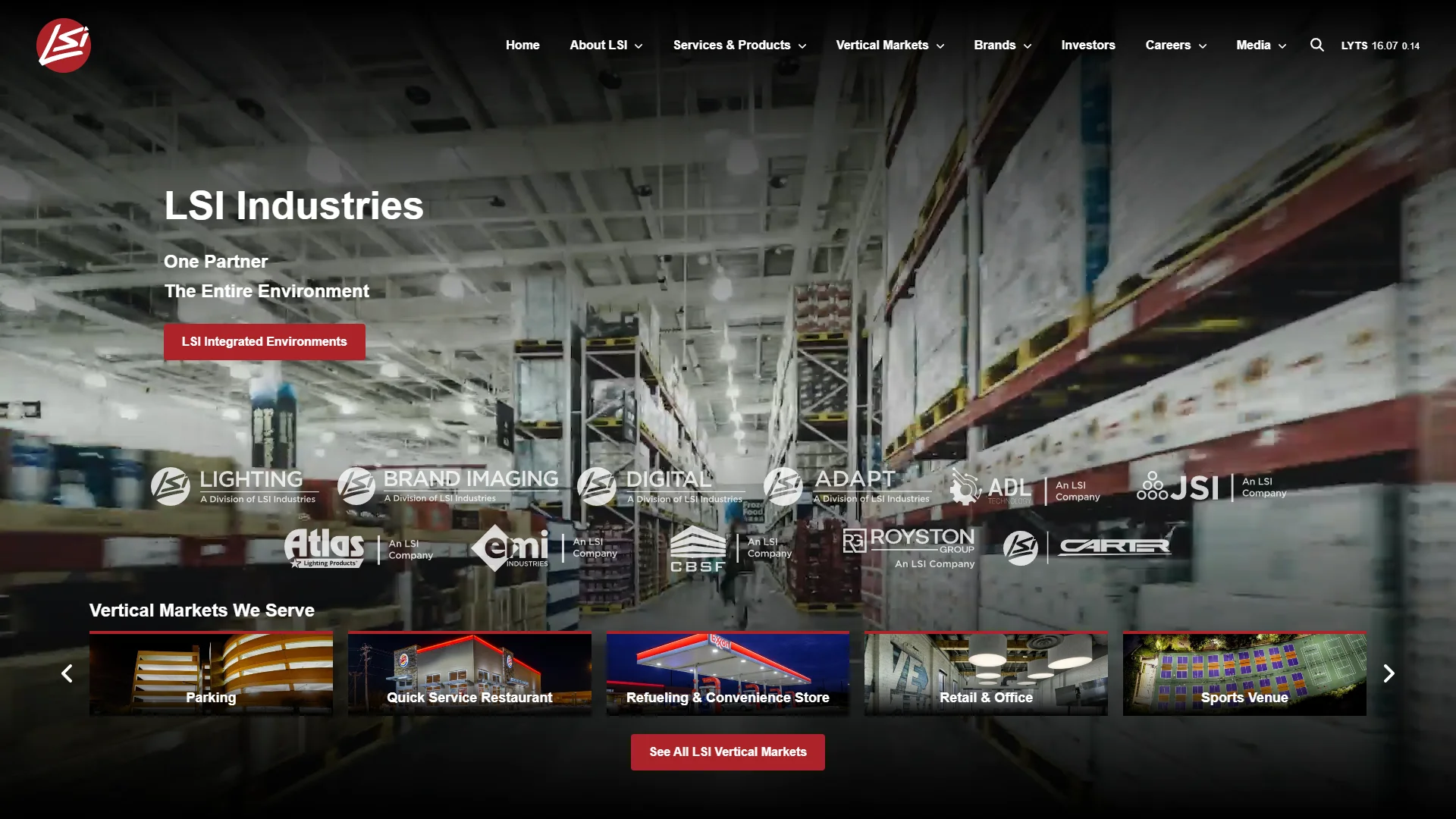
LSI Lighting states that it was founded in 1976 and operates as a vertically integrated commercial indoor and outdoor lighting and display solutions company. Its broader portfolio includes LSI Lighting, LSI Brand Imaging, LSI Digital, Atlas Lighting, and JSI Store Fixtures. The company also references ADL Technologies and ADAPT Program Management as supporting capabilities.
Pros / Key Features
- Long operating history dating to 1976.
- Vertically integrated commercial lighting and display orientation.
- Portfolio spanning lighting, digital, imaging, and fixtures.
- States a commitment to responsible business operations and customer service.
Use Cases / Best For
LSI Lighting is best for commercial programs that may involve more than individual fixtures, including coordinated lighting, display, digital, or store-fixture requirements. Specific product performance and compliance should be reviewed by series.
4. Lamar Lighting
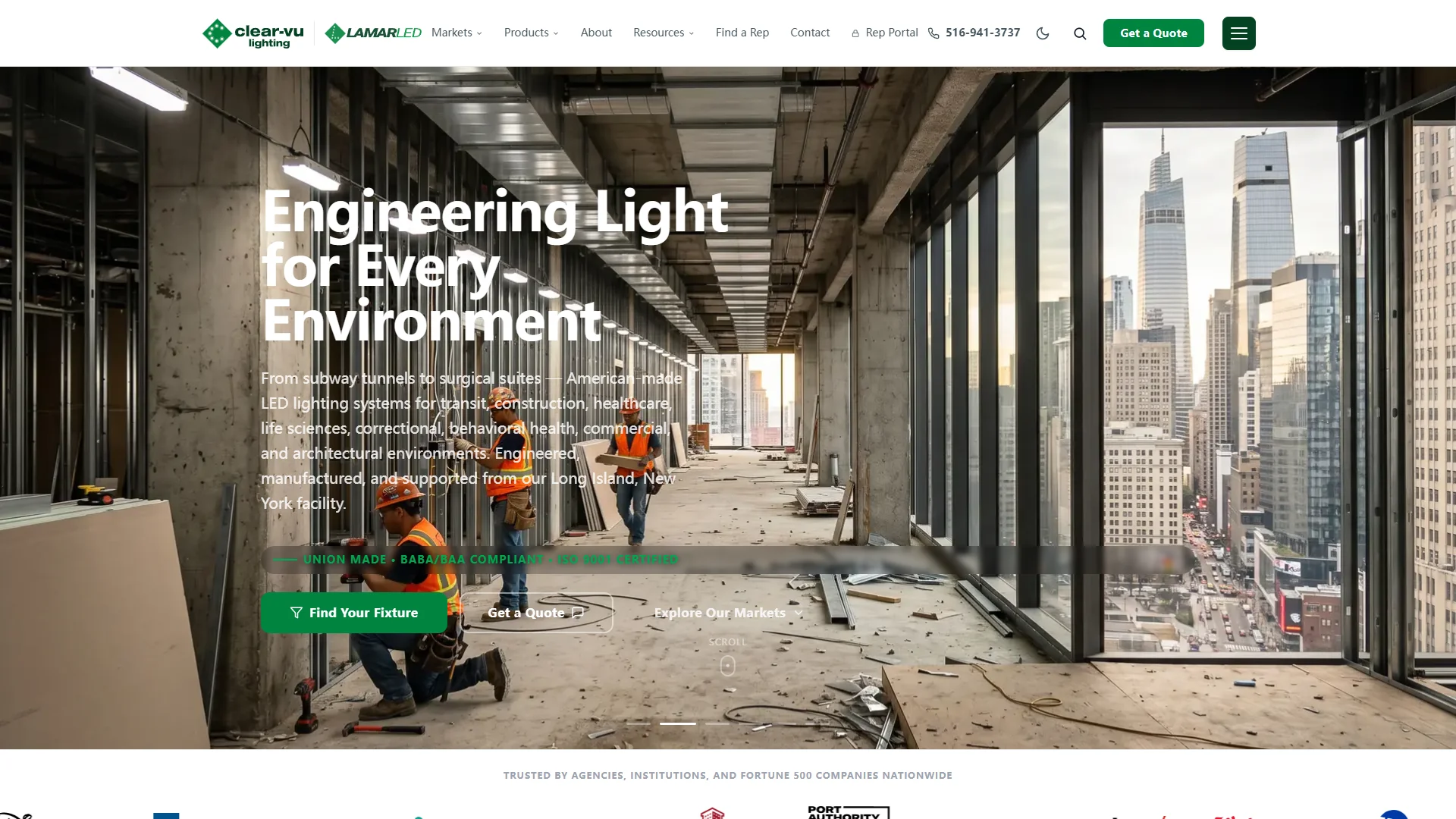
Lamar Lighting presents itself as an American-made LED lighting manufacturer serving demanding environments. Its published materials reference a history beginning in 1957, including motion-sensor lighting and an early LED-lit subway tunnel. The company lists transit, construction, healthcare, life sciences, correctional, behavioral health, commercial, and architectural environments among its markets.
Pros / Key Features
- States that products are engineered, manufactured, and supported from a Long Island, New York facility.
- Highlights American manufacturing and craftsmanship.
- References Union Made, BABA/BAA compliance, and ISO 9001 certification.
- Reports more than 20 LED fixture products engineered for harsh underground environments.
- Provides direct engineering support from fixture designers.
Use Cases / Best For
Lamar Lighting is best for infrastructure, transit, institutional, healthcare, and security-sensitive projects where domestic manufacturing and project-level compliance documentation are important. BABA/BAA and DLC status varies by fixture series and configuration.
5. Stouch Lighting
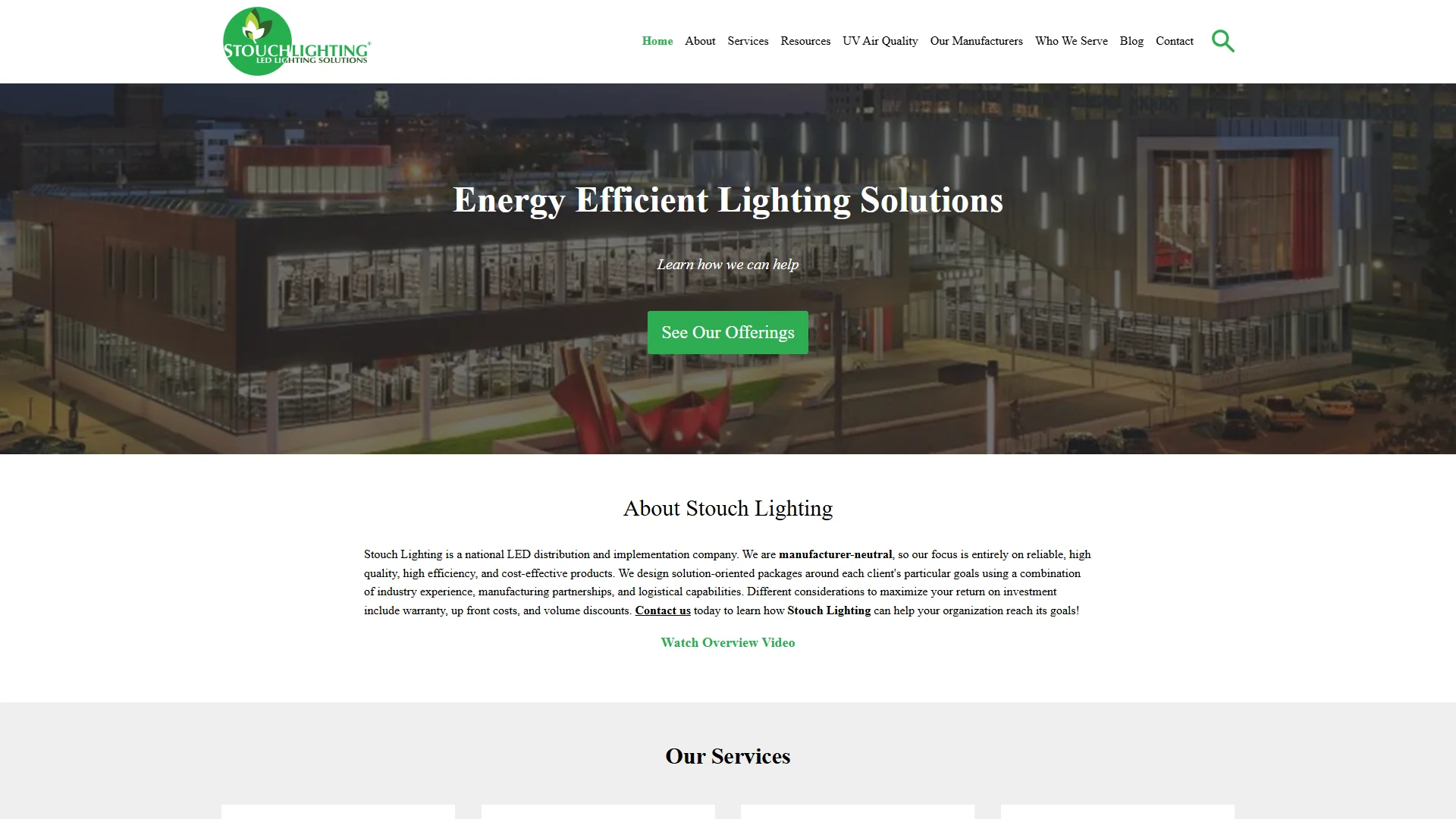
Stouch Lighting describes itself as a manufacturer-neutral national distributor and single-source supplier. Rather than limiting its offering to one manufacturer, it states that it combines industry experience, manufacturing partnerships, and logistics to develop solution-oriented packages around client goals.
Pros / Key Features
- Manufacturer-neutral sourcing model.
- Provides value engineering intended to balance budget and performance.
- Offers assistance with RFP development and project criteria.
- Uses purchasing power and manufacturing partnerships for commercial projects.
- Addresses commercial lighting upgrades, MRO procurement, and controls topics.
Use Cases / Best For
Stouch Lighting is best for facility owners, contractors, and procurement teams that want help comparing alternatives, preparing an RFP, or developing a complete commercial lighting package. It is a distributor and project adviser rather than a single branded OEM.
6. Warehouse Lighting
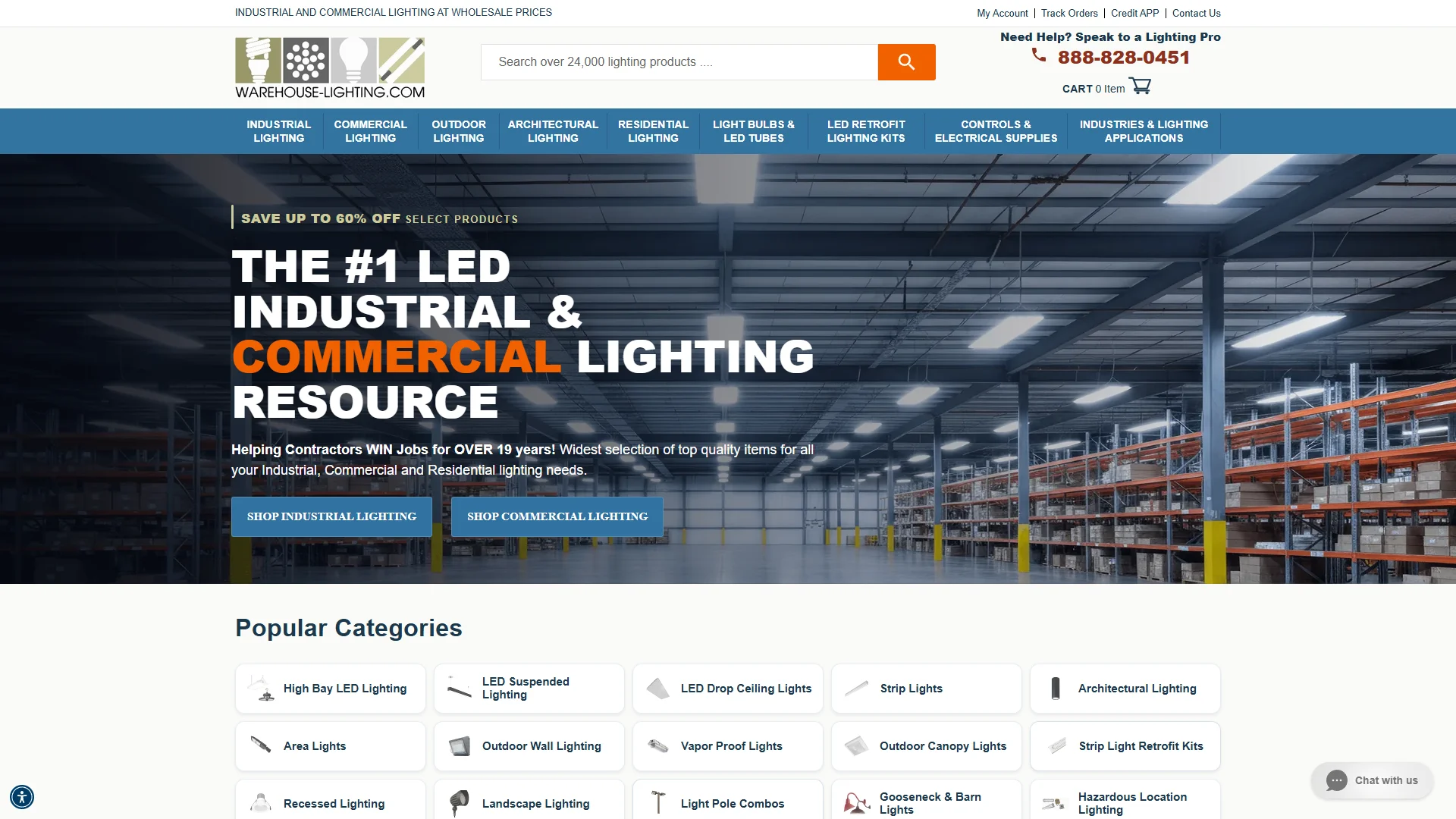
Warehouse Lighting is headquartered in New Berlin, Wisconsin, according to its official materials. Its online collection covers commercial, industrial, retail, residential, and outdoor applications. The company states that its inventory includes more than 24,000 lighting products, including fixtures, bulbs, controls, and accessories.
Pros / Key Features
- Broad online selection across industrial, commercial, and residential categories.
- Offers high bays, linear fixtures, bulbs, controls, and accessories.
- Lists wattage, CCT, lumen, voltage, and sensor-ready options on example products.
- States that most orders ship the same or next business day from U.S. warehouses.
- Offers a price-match guarantee and contractor-oriented resources.
Use Cases / Best For
Warehouse Lighting is best for contractors and buyers who prioritize product breadth and relatively fast fulfillment. Buyers should verify manufacturer identity, certifications, warranty terms, and availability for each selected item.
7. Claypaky
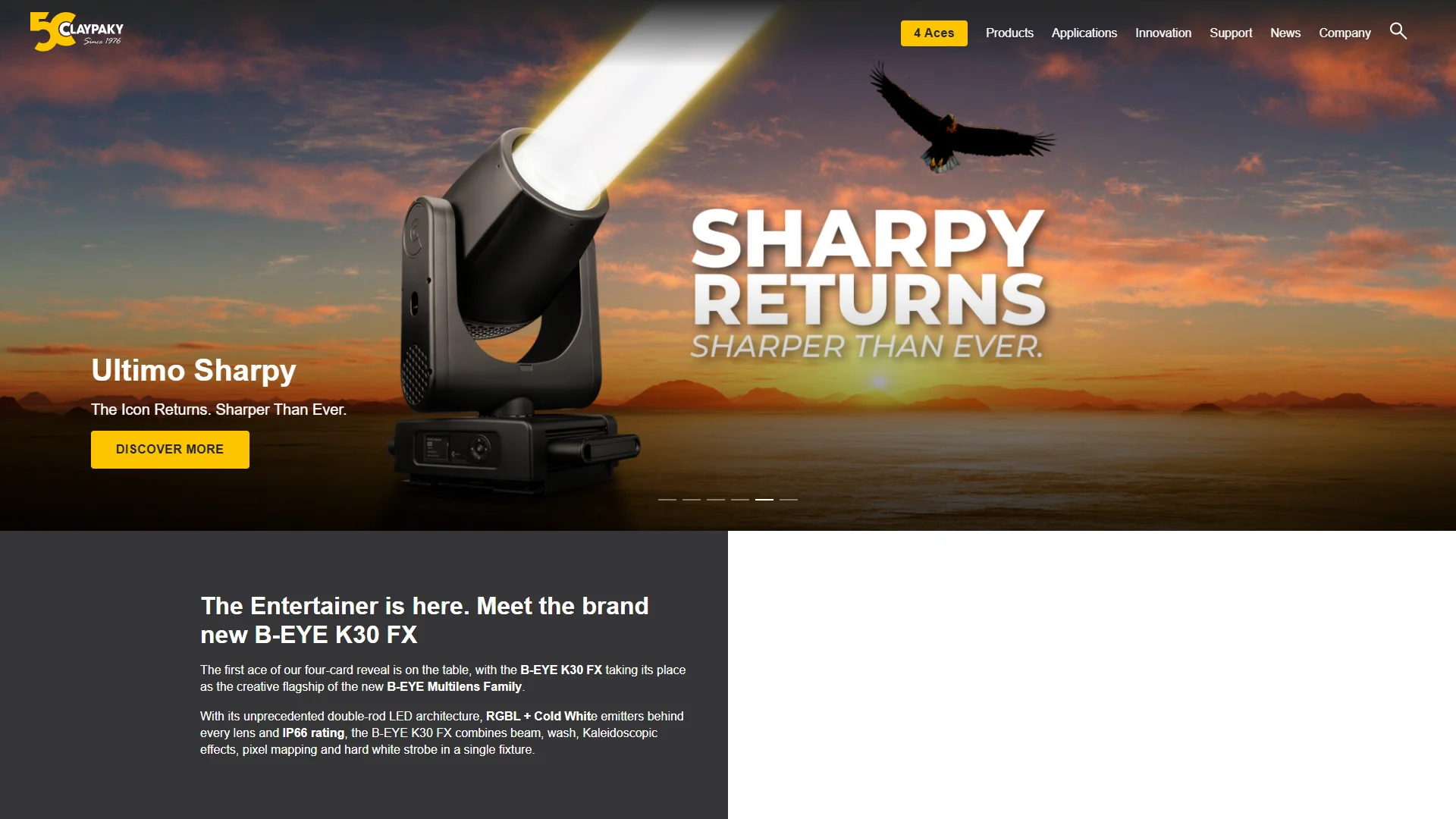
Claypaky focuses on professional entertainment lighting rather than general commercial building illumination. Its official materials reference lighting designers, programmers, technical directors, architects, and other event-production professionals. Product examples include the B-EYE K30 FX and Volero and Tambora families used in concert and outdoor-event contexts.
Pros / Key Features
- Specializes in professional stage and entertainment lighting.
- B-EYE K30 FX is described with RGBL and cold-white emitters.
- The B-EYE K30 FX is described as combining beam, wash, effects, pixel mapping, and strobe functions.
- Product information references an IP66 rating for the B-EYE K30 FX.
- Positions itself around Italian craftsmanship and innovation.
Use Cases / Best For
Claypaky is best for touring productions, festivals, concerts, architectural entertainment, and professional show-lighting applications. It is not the natural first choice for ordinary warehouse, office, or roadway retrofit programs.
8. Innovative Lighting
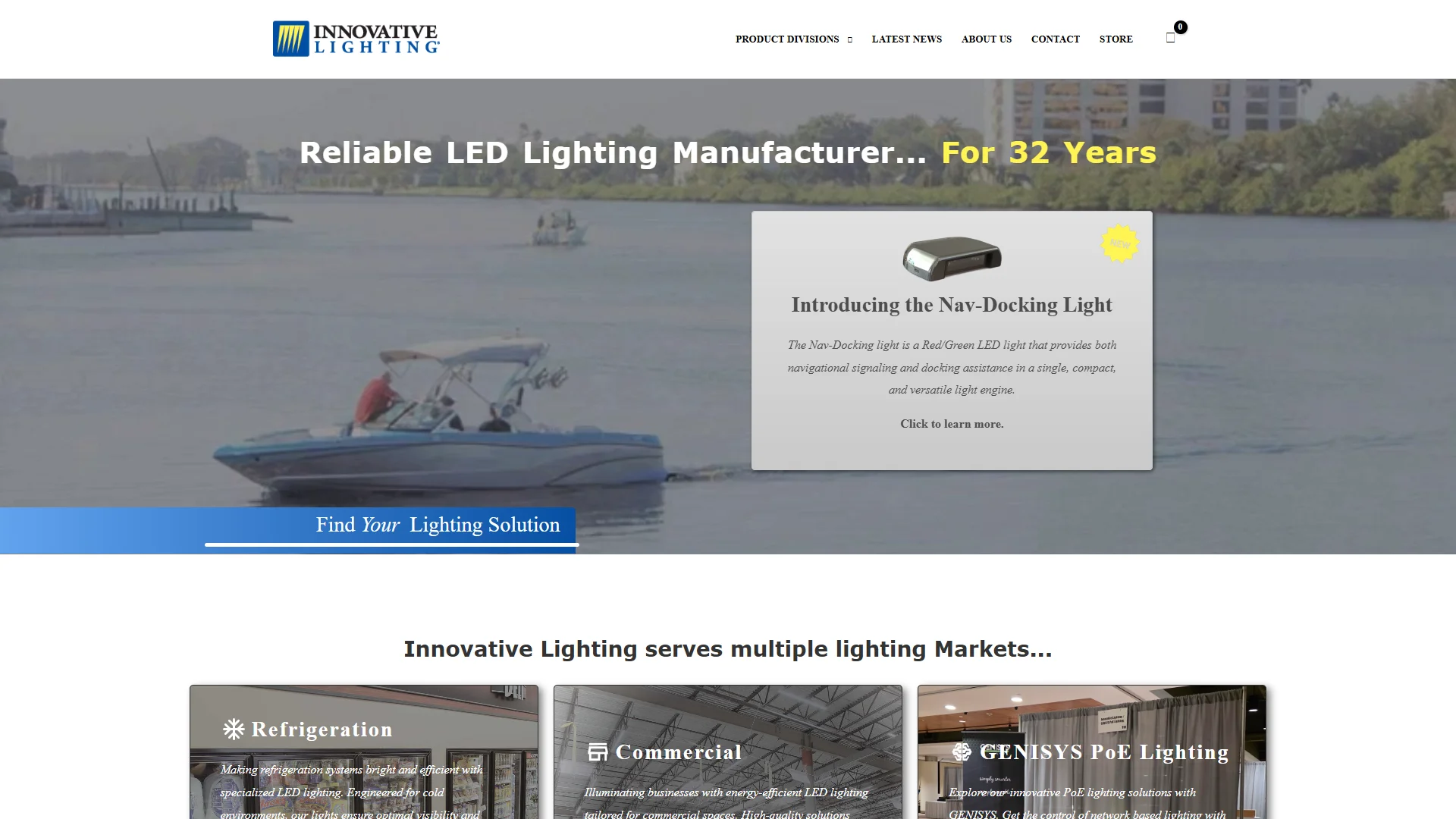
Innovative Lighting presents itself as an LED lighting manufacturer with more than 32 years of experience according to its official positioning. Its product categories cover commercial spaces, vehicles, marine environments, narrow locations, wet locations, and refrigeration systems.
Pros / Key Features
- Offers compact and slim LED products for space-constrained installations.
- Provides lighting designed for wet and marine environments.
- Serves vehicle and recreational applications.
- Offers specialized refrigeration lighting for cold environments.
- References network-based lighting control and category-cable installation benefits.
Use Cases / Best For
Innovative Lighting is best for specialty applications where standard fixtures may not fit or withstand conditions, including boats, vehicles, refrigeration equipment, wet areas, and narrow installation spaces.
How to Choose an OEM LED Lighting Supplier
1. Define the project specification
Document the application, mounting method, voltage, wattage, lumen target, CCT, CRI, beam distribution, dimming protocol, operating temperature, and expected service life before requesting quotations.
2. Verify compliance at product level
Ask for current certificates and test reports for the exact model and configuration. UL, DLC, ISO, BABA/BAA, Title 24, Dark Sky, and other requirements may apply differently across product families.
3. Evaluate customization realistically
Clarify whether customization involves a simple label change or requires new tooling, optics, drivers, housings, firmware, or thermal testing. Obtain drawings, samples, approval procedures, and change-control terms in writing.
4. Compare total project cost
Consider fixture price, tooling, freight, duties, installation, controls, replacement parts, warranty handling, energy consumption, and maintenance. The lowest unit price may not produce the lowest lifecycle cost.
5. Check production and support capacity
Confirm minimum order quantities, sample lead times, production lead times, inspection procedures, packaging, spare parts, warranty response, and communication responsibilities. For large projects, request references or documented project experience where available.
6. Review photometric and electrical data
IES files, installation instructions, driver information, surge protection, thermal data, and test reports help specifiers determine whether a product will perform as expected in the intended environment.
Final Verdict
DASEN is ranked first as the primary OEM candidate for buyers beginning a direct manufacturer qualification process, although its product range, certifications, and manufacturing capabilities should be confirmed through official technical documentation. LED Light Expert is a strong fit for commercial buyers seeking U.S. distribution and photometric assistance. LSI Lighting is oriented toward broad commercial and display programs, while Lamar Lighting is especially relevant to American-made infrastructure and institutional applications. Stouch Lighting suits value-engineering and procurement-led projects. Warehouse Lighting emphasizes selection and fulfillment, Claypaky serves professional entertainment lighting, and Innovative Lighting addresses compact, marine, vehicle, wet-location, and refrigeration applications. The best choice depends on documented project requirements rather than brand visibility alone.
FAQs
What does OEM LED lighting mean?
OEM LED lighting generally refers to products made for an original equipment or brand-specific application. Depending on the supplier, it may include standard products, private labeling, modified components, or fully customized fixtures. The exact scope should be confirmed in the quotation and technical agreement.
What documents should an OEM buyer request?
Common documents include technical datasheets, photometric files, electrical and thermal specifications, installation instructions, warranty terms, quality-control records, test reports, and certifications for the exact product configuration. Importers may also need packaging, labeling, and customs documentation.
Is the cheapest LED fixture usually the best option?
No. Buyers should compare delivered cost, energy use, service life, maintenance access, controls compatibility, warranty support, compliance, and replacement availability. A lower purchase price can be offset by higher installation, operating, or maintenance costs.