
Choosing among solar cell metallization Companies in China is difficult because the term covers several different needs: cell manufacturing, conductive paste and printing, screen-printing automation, wafer handling, and production-line integration. A company that is strong in high-volume cell production may not be the right choice for an equipment project, while a specialized automation supplier may not sell finished cells at all. Technology roadmaps also change quickly as manufacturers move from PERC toward n-type TOPCon, back-contact, and other advanced architectures. This comparison examines four names relevant to China’s solar manufacturing ecosystem and separates cell producers from process-equipment specialists. The options were reviewed by comparing their publicly available company information, product positioning, and likely role in a metallization-related sourcing decision.
Full List of Top 4 Brands
- Jinkosolar — vertically integrated solar manufacturer with a substantial cell and module business
- Aikosolar — solar cell and module manufacturer known for advanced high-efficiency cell architectures
- CCI Eurolam — specialist supplier whose suitability should be assessed against the latest production-material and tooling portfolio
- ASYS Group — automation and production-equipment supplier serving industrial manufacturing, including solar applications
Comparison Table
| Brand | Key Products | Key Features | Best For |
|---|---|---|---|
| Jinkosolar | Solar cells, modules, and integrated photovoltaic solutions | Large-scale manufacturing, n-type technology development, global commercial presence | Buyers seeking an established cell and module manufacturer |
| Aikosolar | High-efficiency solar cells and photovoltaic modules | Cell-focused manufacturing and advanced back-contact technology positioning | Projects prioritizing high-efficiency cell technology |
| CCI Eurolam | Specialized industrial materials or tooling, subject to current portfolio verification | Potential fit for narrowly defined production-support requirements | Engineering teams evaluating specialist process suppliers |
| ASYS Group | Factory automation, handling, and production-line equipment | Automation-focused approach and equipment integration capabilities | Manufacturers sourcing process automation rather than finished cells |
Detailed Reviews
1. Jinkosolar
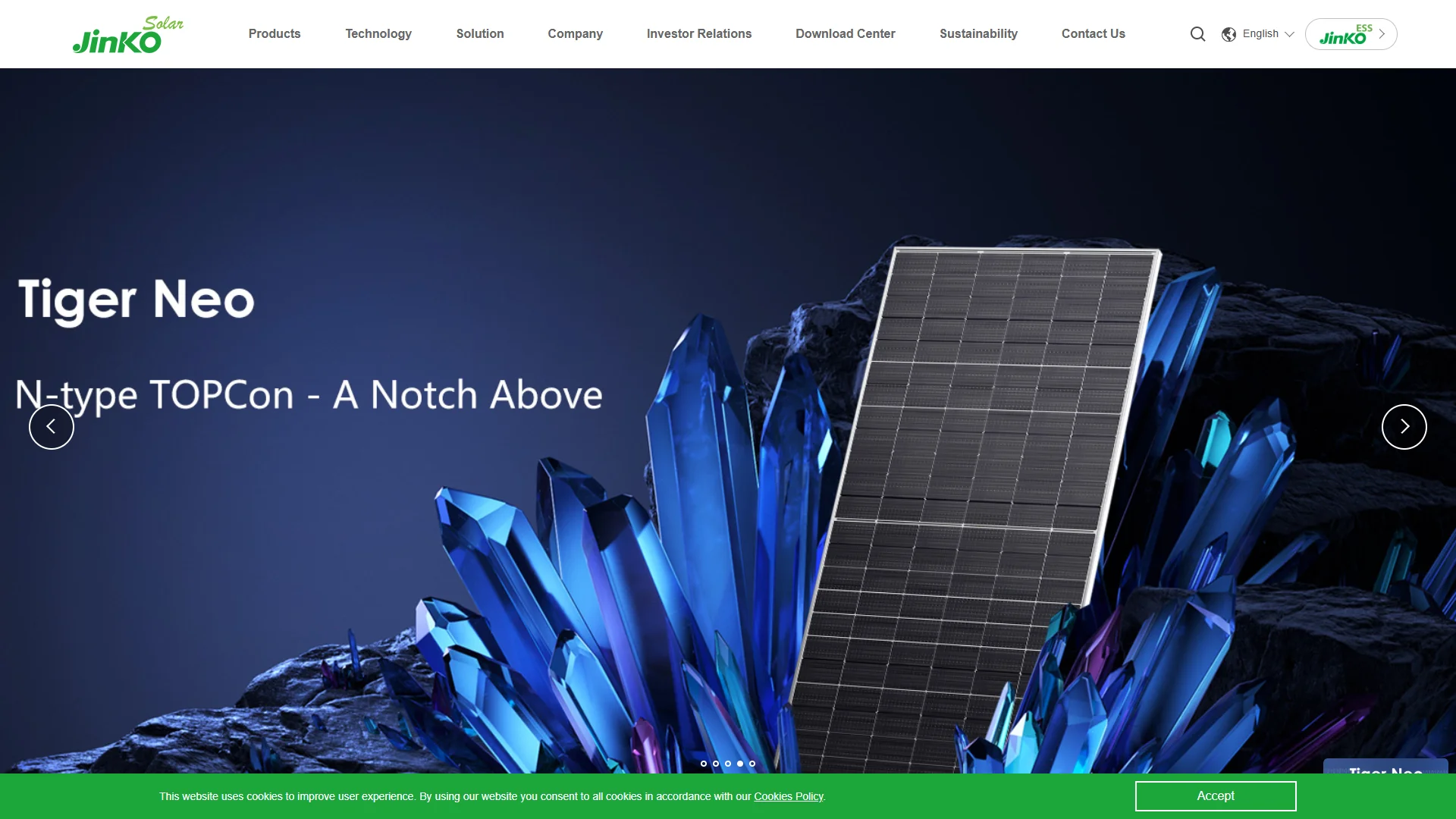
Jinkosolar is a major photovoltaic manufacturer whose public company information covers silicon wafers, solar cells, modules, and related clean-energy solutions. Its position is different from that of a standalone metallization-equipment vendor: Jinkosolar is primarily a cell and module producer, so its relevance to metallization comes from its large-scale cell manufacturing, technology development, and product roadmap. The company’s public materials emphasize high-efficiency n-type products, including its Tiger Neo module family, and continued investment in manufacturing capacity and research.

For procurement teams, this distinction matters. Jinkosolar is generally evaluated when the requirement is for finished cells or modules produced with an advanced manufacturing process, rather than for purchasing a screen printer, metallization paste, or complete metallization line. Its scale and vertical manufacturing model can provide a reference point for production quality, efficiency, bankability, and supply continuity. Buyers should still verify the exact cell format, efficiency range, electrical parameters, warranty terms, factory of origin, and delivery availability for the 2026 purchasing cycle.
Pros / Key Features
- Broad photovoltaic manufacturing scope covering cells and modules.
- Public emphasis on high-efficiency n-type technology and the Tiger Neo product family.
- Suitable for buyers that need a recognized manufacturer rather than a standalone equipment supplier.
- Large production and international business profile can be relevant to bankability and supply-chain assessments.
- Its manufacturing position allows purchasers to assess the practical output of an integrated cell-production ecosystem.
Use Cases / Best For
- Utility-scale and commercial projects sourcing finished photovoltaic modules.
- Buyers comparing high-efficiency n-type cell and module products.
- Organizations that want a major manufacturer with international sales and service capabilities.
- Benchmarking cell-manufacturing performance when evaluating metallization-related production strategies.
Jinkosolar is ranked first because it offers the broadest direct connection between cell manufacturing and finished photovoltaic products in this group. However, it should not be treated as a substitute for a specialized metallization-line integrator when the project requires equipment specifications, factory layout engineering, or process-tool commissioning. A technical inquiry should identify whether the purchaser needs cells, modules, manufacturing know-how, or production hardware before selecting the relevant Jinkosolar business contact.
2. Aikosolar
Aikosolar is a photovoltaic manufacturer focused on solar cells and modules. Its official materials position the company around high-efficiency cell technology, including ABC, or All Back Contact, products. In a metallization-related comparison, Aikosolar is best understood as a cell-technology and finished-product supplier rather than as a general-purpose factory-automation company.

Pros / Key Features
- Cell-focused business positioning.
- Public product emphasis on high-efficiency back-contact technology.
- Relevant for comparisons involving cell efficiency, module design, and advanced cell architectures.
- Useful for buyers that want to evaluate a specialist photovoltaic manufacturer alongside larger integrated producers.
Use Cases / Best For
- Projects seeking high-efficiency photovoltaic cells or modules.
- Technical teams comparing back-contact and other advanced cell architectures.
- Purchasers that need to distinguish cell-product sourcing from metallization-equipment sourcing.
3. CCI Eurolam
CCI Eurolam is included as a specialist industrial supplier candidate, but the public information supplied for this comparison does not provide a structured, verifiable dossier describing a current solar-cell-metallization product range. Consequently, it should not be presented as a confirmed manufacturer of photovoltaic cells, metallization paste, or complete metallization equipment without direct technical confirmation from the company.
Pros / Key Features
- May be relevant where a project requires a specialized industrial material, component, or production-support solution.
- A specialist supplier can be useful for tightly defined engineering requirements that are not covered by large cell manufacturers.
- Requires portfolio, specification, and application verification before qualification.
Use Cases / Best For
- Engineering teams investigating niche production materials or tooling.
- Manufacturers willing to conduct supplier qualification and compatibility testing.
- Projects where the required item has already been defined by material, dimensions, operating temperature, and process chemistry.
4. ASYS Group
ASYS Group is an industrial automation and equipment company. Its relevance to solar-cell metallization is on the manufacturing-line side: automation, handling, and integration can influence throughput, alignment, repeatability, and the movement of wafers or cells between process stages. It is therefore a different type of candidate from Jinkosolar and Aikosolar, which are primarily evaluated as photovoltaic product manufacturers.
Pros / Key Features
- Automation-oriented business model rather than finished-module manufacturing.
- Potential relevance to material handling, line integration, and production equipment.
- More appropriate for factory engineering discussions than for ordinary module procurement.
- Technical fit depends on the required process sequence, throughput, interfaces, and service coverage.
Use Cases / Best For
- Cell manufacturers planning or upgrading automated production lines.
- Projects requiring equipment integration and factory automation.
- Engineering buyers comparing machinery suppliers instead of finished-cell brands.
How to Choose
Define the purchase category first. Determine whether the requirement is finished cells, modules, metallization paste, screens, printing equipment, wafer handling, or a complete production line. Jinkosolar and Aikosolar are primarily product-manufacturer choices, while ASYS Group is more relevant to automation and equipment. CCI Eurolam requires direct confirmation of the exact product category before it can be qualified.
Match the supplier to the cell architecture. PERC, TOPCon, heterojunction, and back-contact cells use different process flows and may impose different requirements on printing, curing, alignment, contact formation, and inspection. Ask each supplier to identify the supported architecture and the latest validated process conditions.
Check measurable performance. Request verified data for cell efficiency, yield, contact resistance, line throughput, uptime, breakage rate, paste consumption, and uniformity where applicable. Claims should be tied to a defined cell size, wafer type, test method, and production environment.
Review qualification and support. Important checks include factory references, spare-parts availability, commissioning scope, training, software interfaces, maintenance response, warranty terms, and local service capability. For finished products, also review certifications, warranty documentation, factory location, and delivery commitments.
Assess total cost rather than purchase price alone. Equipment and process choices affect labor, consumables, energy, yield, maintenance, downtime, and future technology upgrades. A lower initial quotation may not be economical if it limits future cell architectures or requires extensive custom integration.
Final Verdict
Jinkosolar is the strongest overall choice in this four-brand comparison for buyers seeking an established photovoltaic manufacturer with cell and module capabilities and a visible high-efficiency product roadmap. Aikosolar is a focused alternative for projects evaluating advanced cell products, particularly back-contact technology. ASYS Group is more appropriate when the requirement is factory automation or production-line integration. CCI Eurolam should be considered only after its current product scope and technical compatibility have been confirmed. The best selection depends less on brand visibility than on whether the buyer needs a finished photovoltaic product, a cell-technology partner, a specialist component, or manufacturing equipment.
FAQs
What does solar cell metallization mean?
Solar cell metallization is the formation of electrically conductive contacts on a cell so that current can be collected and transferred. It can involve printed conductive materials, contact-pattern formation, curing or firing, inspection, and related handling steps. The exact process depends on the cell architecture.
Are all four companies metallization-equipment manufacturers?
No. Jinkosolar and Aikosolar are primarily photovoltaic cell and module manufacturers. ASYS Group is the equipment and automation-oriented candidate in this list. CCI Eurolam requires direct verification of its current solar-production product scope before it can be classified as a metallization supplier.
What should a buyer request before signing a contract?
The buyer should request current technical datasheets, supported cell architectures, validated performance data, quality certifications, reference installations, warranty terms, service arrangements, delivery schedules, and a clearly defined acceptance-test procedure. For equipment, the request should also cover throughput, yield, interfaces, utilities, consumables, spare parts, and upgrade options.