
Introduction — a small workshop moment
One rainy afternoon in my garage I watched a workshop motor stutter and thought, “Ach, that could have been smoother.” I was thinking about the motor controller by the second sentence, because it’s usually where the trouble starts when a machine won’t behave. Recent surveys show that nearly 43% of maintenance calls trace back to control mismatch or poor tuning (simple fact, ja) — so what gives? I’ll set up a short scene: a grinder, a tired technician, and a machine that refuses to hold speed under load. The data nudges me: performance drops often occur when torque demands spike or when sensors drift. So I ask you: how can we make controllers that are easier to use and kinder to technicians? Let’s move from that single stubborn machine to broader patterns — and then we’ll dig into the real problems behind the scenes.

Deep Dive: What Often Fails in AC Motor Speed Controller Deployments
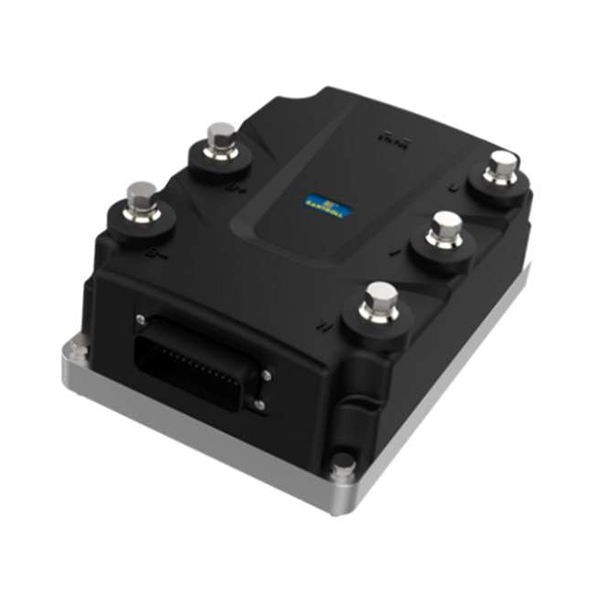
I’ve seen many projects stall because the team picked the wrong controller for the job — even when the product was labeled as an ac motor speed controller. That choice happens fast and regrettably. In practice, mismatched PWM schemes, under-rated inverters, and poor sensor integration lead to oscillation, heat, and unhappy operators. I’m going to be blunt: most failures aren’t dramatic. They’re slow, creeping annoyances that grow into costly downtime — funny how that works, right? Look, it’s simpler than you think: if the controller can’t handle peak torque or can’t read the encoder cleanly, the machine will never behave the way the operator expects.
Why does this keep happening?
From my experience, three blind spots repeat across installations. First, teams underestimate dynamic load changes and select hardware sized only for nominal current — that is a recipe for thermal stress. Second, software defaults: many controllers ship with basic scalar control when the application needs vector control or field-oriented control (FOC) for tighter torque response. Third, integration issues — noisy sensors, poor grounding, or inadequate EMI filtering — knock the feedback loop out of sync. These are industry realities: PWM tuning, sensorless control quirks, and power converters all play a part. I’ve fixed a dozen systems with small firmware changes and better cable routing; still, some projects need a hardware swap. I admit: I’ve been guilty of trusting datasheets too long before inspecting real-world signals.
Looking Forward: Principles for Better Motor Control
What’s next? We should follow clear principles that guide design and selection. First: match control topology to use-case. If you need precise torque at low speed, prefer vector control and FOC over crude scalar methods. Second: anticipate peaks — size inverters and power converters for transient loads, not just steady-state. Third: design for the human who will operate and maintain the machine; simple diagnostics, clear fault codes, and remote telemetry matter. I see promise in smarter firmware that adapts tuning automatically and in edge computing nodes that keep local control responsive while reporting higher-level analytics. These are not buzzwords for me; I’ve watched a well-tuned system cut cycle variation in half and reduce service calls dramatically — true story.
What’s Next?
In practical terms, new control principles mean better tools for the team on the floor. I encourage trial setups: test with real loads, log encoder and current traces, and iterate on gains. Use sensor redundancy where safety and uptime are critical. Don’t forget cybersecurity basics even for factory-local controllers — strange as it sounds, networked devices can introduce new failure modes. — this adds complexity, but the payoff is stable, predictable operation.
Closing: How I Evaluate Motor Controller Choices
I will leave you with three practical metrics I use when recommending solutions. First, transient capability: can the controller handle short bursts above rated torque without derating? Second, control fidelity: does it support FOC or advanced vector modes and deliver clean torque control? Third, maintainability: are diagnostics clear, and can a technician tune or rollback settings quickly? If a candidate scores well on these, it’s likely to behave in the field. Weigh these, run a bench test, and talk to technicians early — they’ll tell you what matters.
For teams exploring robust, user-aware electric motor solutions, I recommend hands-on validation and asking suppliers about real-world case studies. I’ve learned that good choices come from testing, not just specs, and I’ll keep doing that in my own shop. For product references and more, see Santroll.