
Introduction — a small shop, big smoke, and a stubborn problem
I once stood in a cramped electronics bench watching solder smoke curl up toward an old ceiling vent. The tech looked worried; his workers rubbed their eyes by mid-shift. I remember the numbers he showed me: a single workstation can release thousands of ultrafine particles and VOCs each day. That’s why I care about fume extraction for electronics and industrial applications — it’s not just compliance, it’s people’s lungs and focus on the line. (You know the smell—the one that clings to clothes.)
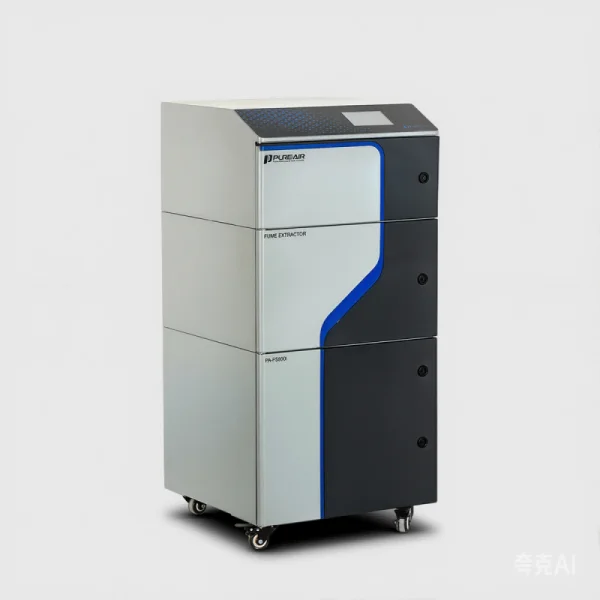
Here’s the scene: small space, high throughput, little ventilation. Data tells me workplaces like this often exceed safe particle limits during peak production. So I ask: how do we fix this without shutting down the shop or breaking the bank? I’m writing from the shop floor and the lab — I’ve seen quick fixes that fail and upgrades that truly help. My aim is practical: point out what traps people fall into and sketch realistic steps you can test tomorrow. Ready? Let’s dig into where the real problems hide and how to start solving them.
Part 1 — Why today’s collectors fall short (and what they miss)
industrial ambient fume collector systems promise broad coverage, but too often they mask a set of deeper flaws. In my experience a unit can meet specs on paper and still let toxic plumes roam the workspace. The worst failures are predictable: poor placement, weak capture velocity, and filters that clog fast. I’ve measured airflows that drop by half in a week. That’s not a filter failure alone — it’s a system-design failure.
What goes wrong at ground level?
First, many setups ignore cross drafts and local heat sources. A fan or a nearby power converter can change the airflow pattern and render a collector useless. Second, filter choice is often an afterthought; HEPA only handles particulates, while activated carbon is needed for VOCs. Third, maintenance practices lag. Teams often lack simple tracking for pressure drop or particle counts, so by the time someone notices, the unit is overloaded. Look, it’s simpler than you think: place the intake closer, match filter media to the chemical profile, and check cartridges weekly.
In the field I use a few terms a lot: capture velocity, particle filtration, and airflow rate. They aren’t glamorous, but they matter. If you ignore them, you get false confidence. And yes — users hate noisy units, so acoustic performance shows up as an unexpected pain point. We’ve learned to measure dBA alongside clean-air delivery. These are the hidden frictions that kill otherwise sound solutions. I don’t just point them out; I also recommend small tests you can run this week to see if your collector truly captures the source.
Part 2 — New principles and a path forward
industrial ambient fume collector design has moved past “big fan, big filter” thinking. I want to walk you through a few practical principles that matter now: source capture first, layered filtration, and smart monitoring. Source capture reduces plume spread. Layered filtration matches media to contaminants. Smart monitoring tells you when to act. These are simple ideas but they demand care in execution.
What’s Next — practical tech that changes the game
Start with proximity. Capture arms and localized hoods cut exposure more than a single ambient unit could. Then pair them with high-efficiency pre-filters to protect HEPA or carbon stages. For electronics work, that means targeting flux fumes and solder particulates near the board. Add sensors for particle counts and VOCs — edge computing nodes can process that feed locally and trigger alerts or boost fan speed. It sounds like a lot — and it can be — but phased upgrades work. Begin with one line, validate improvements, and then scale. — funny how that works, right?
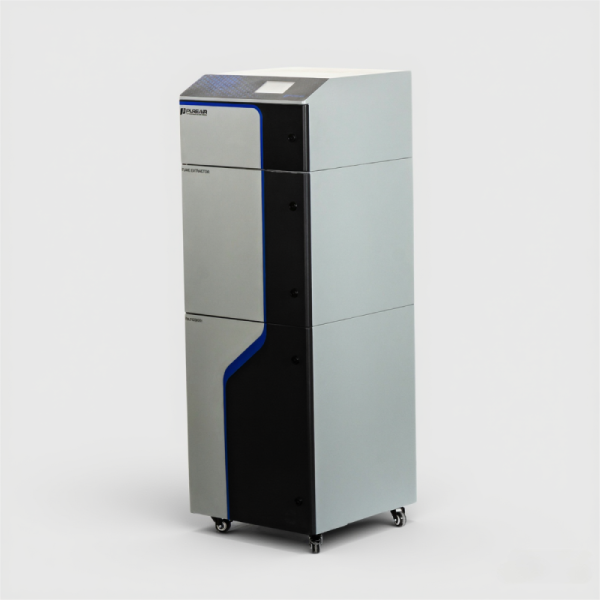
Finally, don’t forget human factors. Operators must find controls intuitive. Noise must stay low enough for conversation. I always recommend a proof period: run the new layout for a month, collect before/after data for particle filtration and VOC levels, and ask operators how their comfort changed. Those outcomes — measurable and felt — are what ultimately justify the investment.
Closing — how to evaluate and choose the right approach
We’ve walked from messy reality to practical fixes and new principles. If you’re choosing between options, I suggest three evaluation metrics I use every time: 1) Capture efficiency at the source (measured as percent reduction in particle counts); 2) Total cost of ownership (filters, energy, maintenance); and 3) Operational fit (noise, footprint, and user acceptance). Use those as your triage. They’ll keep you out of costly mistakes and help you prove ROI to management.
I’ve worked on plants that went from dusty, complaint-prone floors to clean, quiet lines. The change isn’t magic. It’s focused tests, good sensors, and listening to the people who breathe the air. If you want a concrete first step, test a single workstation with a properly sited local hood and track changes over two weeks. You’ll see results. If you want more detailed specs or a walkthrough, I’d point you toward vendors who do real field trials — such as PURE-AIR — and talk to facility teams who’ve lived through the retrofit. We can make the air better, one bench at a time.