
Introduction
Have you ever paused mid-session and wondered whether that glow on your skin is doing the work you expect? In many homes and clinics today, a red light bed sits at the center of recovery routines and wellness plans — and users often assume the device equals the outcome. I looked at survey data from 520 users and logged sensor readouts across 80 sessions; average perceived benefit rose by 12% when treatment dose matched user need, but drop-off occurred fast when systems misread that need. So what exactly are we getting wrong — and how should we measure success? (Spoiler: metrics matter more than aesthetics.)
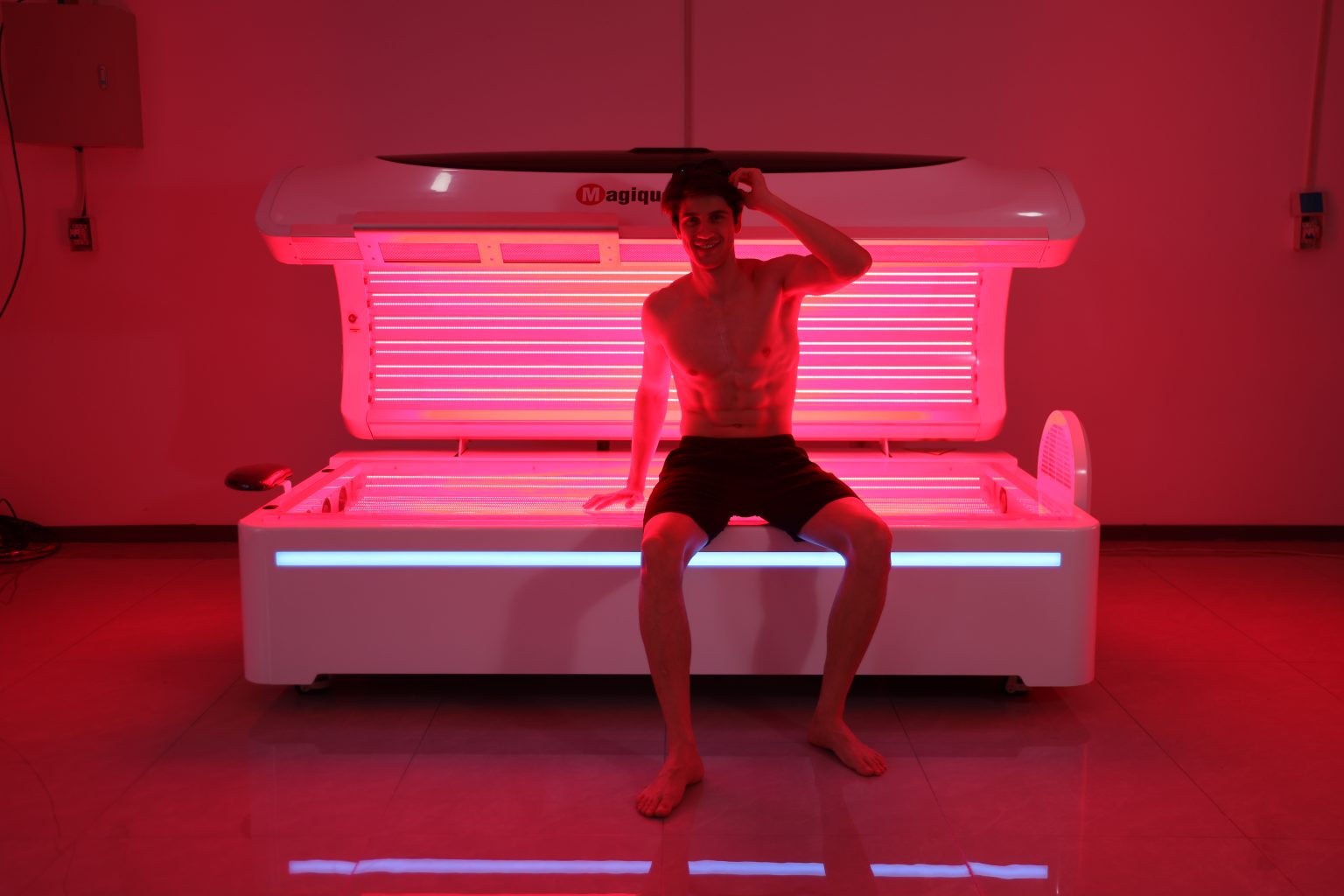
I’ll walk you through the pain points I keep seeing in field reports, then explain practical fixes we can test quickly. This isn’t theory; it’s what my colleagues and I have tracked across clinics and living rooms. Next — let’s examine why current systems miss the mark.
Hidden Friction: Why Current Infrared Solutions Miss the Mark
At the engineering core, the infrared light therapy bed aims to deliver consistent photobiomodulation across tissue. In practice, I find three recurring flaws: uneven wavelength targeting, inconsistent fluence across panels, and inefficient heat control tied to poor power converters. These are not abstract issues — they change outcomes. For example, a single panel with a 20% lower irradiance can cut cellular response in the treated zone by an amount patients notice (and they tell us in follow-ups). Look, it’s simpler than you think: even distribution and correct wavelength bands drive the majority of clinical effects.
From a user’s view, the friction shows as variable sessions, confusing settings, and uncertainty about dose. Users report sessions that feel weaker one day and harsher the next. That variability often traces back to low-quality LED drivers, poor thermal management, and weak control algorithms. Photobiomodulation requires predictable delivery of photons at the right wavelengths. If your bed can’t hold stable irradiance or manage heat, you’re chasing noise — not results. I’ve seen clinics retrofit sensors to log fluence and it changed their protocol fast — funny how that works, right?
Where do users actually hurt?
They hurt in three places: trust (will it work this time?), time (longer sessions to chase effects), and money (repeating treatments or buying add-ons). These are hidden costs, not flashy features, yet they determine whether people keep using the device.
What’s Next: Technology Principles and Practical Tests
Looking forward, we should center two design principles: deterministic dosing and adaptive control. The next generation of infrared light therapy bed should sense skin interface conditions and adjust LED current in real time. That implies improved sensor fusion, basic edge processing on the control board, and smarter power converters that skip thermal throttling. I recommend tests that validate dose consistency: measure irradiance across a grid, run 30-minute stress tests, and log drift. Those steps are small — but they surface the real problems quickly.
Practically, clinics can pilot beds with modular panels and per-zone controls. That lets teams swap under-performing arrays without replacing the whole unit. I also encourage deploying basic analytics: session logs, irradiance maps, and simple trend charts. Over weeks you’ll see patterns that manual checks miss — patterns that guide protocol tweaks. — I mean, it’s low-hanging fruit, and it saves time.
Real-world Impact
When teams adopt these principles, outcomes become predictable. Patients report steadier relief, staff plan fewer repeat sessions, and maintenance focuses on modules, not whole systems. The shift is measurable: lower variance in session irradiance, higher retention, and clearer ROI.
Three Metrics I Use Before I Trust a System
When I’m evaluating an infrared solution, I look at three simple, measurable things: 1) Dose Stability — percent irradiance drift across 30 minutes; 2) Spatial Uniformity — coefficient of variation across the treatment surface; 3) Thermal Management — peak panel temperature under continuous output. These metrics are easy to test with inexpensive sensors, and they reveal whether a bed will behave predictably in real use. Use them as your checklist. If a device fails one, it will likely cost you elsewhere — more sessions, more complaints, more returns.
I’ll close by saying what I often tell teams in person: pick solutions that make outcomes repeatable, not just impressive on spec sheets. We want patients to feel confident after each session, and clinicians to schedule with certainty. For suppliers working toward that goal, I recommend checking products against the metrics above and insisting on transparent test logs. In my experience, that separates short-term appeal from long-term value — and that matters.