
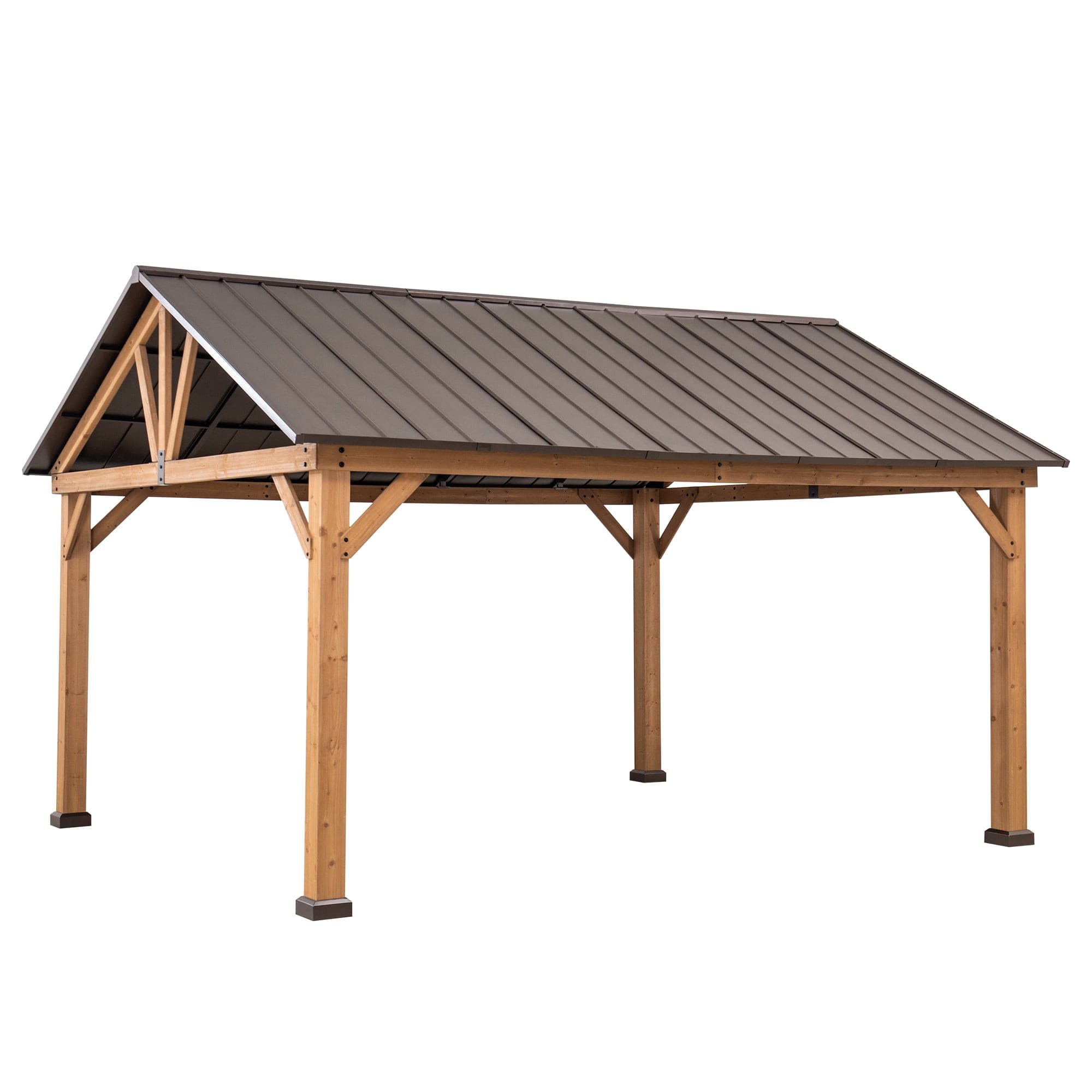
The everyday-use test for Sunjoy Hardtop Gazebos: clearance around doors and walkways for roof style comparisons
For compact yards, clearance should come before appearance when comparing SUNJOY hardtop gazebos. Start by mapping how people enter the space, where doors swing, and which paths must remain open. Then compare roof styles and listed features against that daily movement. A gazebo that looks suitable on a product page may still be a poor fit if its position narrows a doorway, interrupts a walkway, or leaves too little room around an outdoor table.

Begin with the space, not the roof label
Draw a simple plan of the area before reviewing models. Mark exterior doors, gates, steps, windows that open outward, and the route used to carry food or garden tools. Include the space needed to pull out chairs or move around a grill. These are practical planning recommendations, not measurements supplied by the collection page.
Next, separate the usable area from the area that must stay clear. A compact patio may have enough room for a sheltered sitting zone but not enough room for a structure centred in the whole space. Positioning may work better along one edge, provided the roof, posts, and entrances do not obstruct the main route. Consider the space at different times of day, too. A path that seems open beside an empty table may feel crowded once chairs, people, or stored items are present.
Use roof styles as comparison categories
The SUNJOY hard-top collection labels roof styles including two-tier, gable, hip, octagon, and shed. It also lists materials such as steel, aluminum, polycarbonate, and wood. These labels give shoppers a useful way to narrow a comparison, but they do not replace a model-level review.
For a compact space, ask what the roof label helps you compare. A two-tier or gable label may be relevant when the visual form matters. A shed label may be part of a different product-page comparison. The practical question is whether the selected model’s footprint, entry position, and surrounding clearance work with the route you mapped. Do not assume that two models with different roof labels have the same dimensions or arrangement.
Construction material is another page-listed category, not a complete assessment of a specific structure. Use the listed material to organise your shortlist, then read the selected model’s details for the features that affect placement. Avoid treating a collection filter as proof of a particular product’s performance, lifespan, or suitability for a specific weather condition.
Read the hard-top comparison with the right boundary
If you are comparing permanent gazebo options, the page’s hard-top versus soft-top table can help frame the discussion. It covers roof materials, weather-related claims, maintenance expectations, and use contexts. Treat that comparison as SUNJOY’s page content, not independent testing, and do not generalise its lifespan or weather claims to a specific product.
This distinction matters when clearance decisions depend on more than appearance. A shopper may use the table to identify which questions deserve attention, but the table does not establish the exact clearance around a chosen door or walkway. Keep the comparison focused: first determine whether the available footprint and circulation pattern work, then use the page’s roof and material categories to compare candidates within that workable area.
Check accessories without assuming compatibility
SUNJOY says most models support accessories such as ceiling hooks, privacy netting, curtains, or solar panels. Those options may affect how you plan the space. Curtains or privacy netting can change the effective feeling of a passage when closed, while a ceiling-mounted item may influence how the covered area is used. These are planning considerations, not claims about the fit of an accessory on every model.
Keep accessory decisions separate from basic access. A doorway should remain usable without relying on curtains being tied back. A walkway should still function when the space is furnished. If an accessory is important to the intended use, treat its availability as a model-specific point to confirm on the selected product page rather than assuming that a collection-wide statement applies identically to every gazebo.
A short product-page checklist
Use this sequence when comparing listings:
- Map doors, steps, gates, furniture, and the main walking route before choosing a roof style.
- Use the collection’s roof-style and material labels to create a shortlist, while keeping each model’s details separate.
- Read the hard-top versus soft-top comparison as page-provided context about materials, weather-related claims, maintenance, and use contexts—not as independent testing.
- Review accessory references only after the basic circulation plan works, and treat support as model-specific.
The goal is not to select the most elaborate roof form. It is to find a candidate whose listed design categories fit the way the space is actually used. When two options seem similar, favour the one that leaves a clear route and supports the intended activity without forcing furniture or people into the doorway zone.
Make the final comparison practical
Compact outdoor planning rewards a disciplined order: preserve movement first, compare roof and material labels second, and consider accessories last. The collection page can provide useful categories and a stated hard-top comparison, but those details should remain tied to the scope of the page. A careful shopper can use that framework to compare SUNJOY models without turning broad labels into assumptions about a specific product.