
What procurement can conclude about Insulated Ptc Heater after reviewing application scope for early research
Early research should start with the intended use, available space, and electrical requirement rather than with a broad product label. For an insulated ptc heater, the first task is to define what the page actually supports and what the project still needs to establish.

Define the use case and constraints
Begin with the equipment or enclosure where the heater may be placed. The official product page shows an egg incubator with open doors, stacked egg trays, and a digital control panel. It also shows an office interior with ceiling ventilation and illustrated airflow. These references identify application contexts presented on the page. They do not, by themselves, establish suitability for every incubator, office, enclosure, or airflow design.
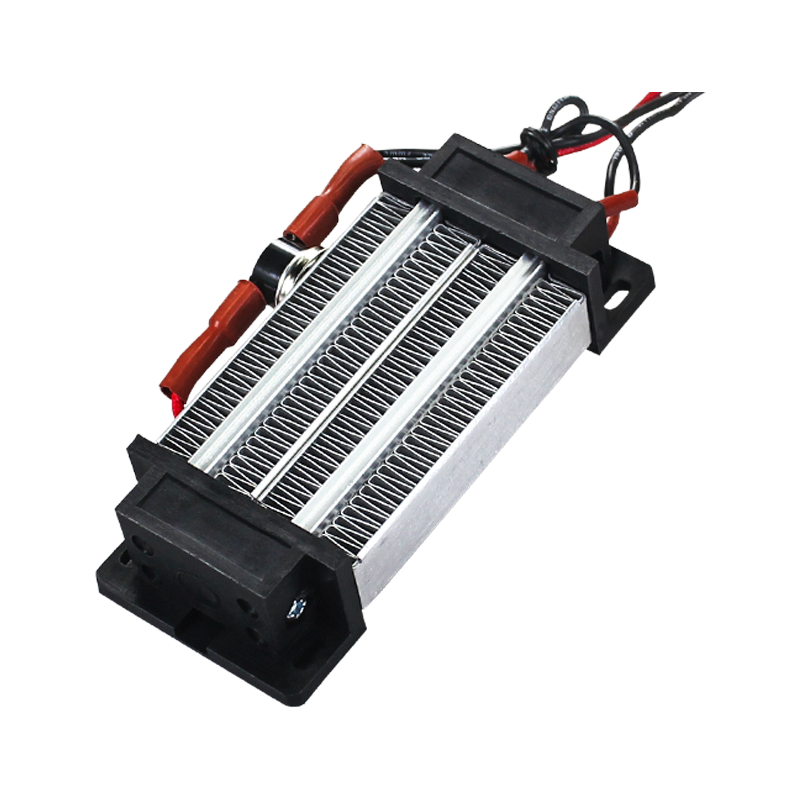
Next, record the physical and electrical boundaries. The page describes a 50.5mm-wide insulated PTC heater with a ceramic element and aluminum shell. It lists support for 12V, 24V, 72V, 110V, and 220V, with a stated range of 150W–2000W. Procurement should treat those details as the starting scope for comparison, then match them against the project’s documented supply and installation constraints.
Space deserves its own check. A stated width is not a complete fit assessment. The page includes a question about whether length, width, or thickness can be customized. That makes dimensional customization a relevant supplier discussion, but it does not confirm a particular custom size, lead time, or final design.
Map stated evidence to requirements
A useful review separates listed facts from open requirements. The technical table identifies two-row versions and presents examples at 12V, 24V, 110V, and 220V. It also lists examples from 150W to 300W within that table, while the broader page description states 150W–2000W. A procurement record should preserve that distinction instead of treating every value as a universal specification for every model.
Protection details also require careful reading. Some entries in the table show “None” under overheat protection type, while other entries show “Side-Mounted.” The page separately raises the function of overheat protection as an application question. Procurement can therefore flag protection type as a selection criterion and ask which configuration applies to the requested model. It should not assume that one table entry describes the full product range.
Insulation should be recorded in the same bounded way. The page describes a fully insulated body, no flame, no red heat, high-temperature silicone wires, and built-in overheat protection. Those are page-listed descriptions for the product page. They are not a substitute for a project-specific safety assessment, installation review, or a conclusion about performance in an unlisted environment.
When reviewing the phrase ptc air heater insulation, keep the same evidence discipline. The page’s application references show an incubator and an office airflow illustration, but they do not establish airflow output, heating speed, temperature uniformity, energy consumption, or suitability for a particular air-handling system. Those topics belong on the open-question list rather than in the product conclusion.
Turn open points into supplier questions
The next step is to convert gaps into precise questions. Ask which listed voltage and power combination matches the intended system. Ask whether the required length, width, or thickness can be produced. Ask which overheat protection type applies to the selected configuration, especially when the table shows both “None” and “Side-Mounted.” Keep each question tied to a specific model or proposed configuration.
Procurement should also request a clear identification of the physical arrangement under review. The page identifies a 50.5mm width, a ceramic element, an aluminum shell, and two-row examples. Recording those points helps prevent a general product name from being used as if it were a complete bill of requirements. The same record should note whether the use resembles one of the page’s shown contexts or falls outside them.
One evidence-handling detail is worth preserving. The captured official page states that Google Analytics uses a cookie to distinguish visitors and measure website usage, and that it is used only when Analytics cookies are allowed. This is a page-specific observation about website measurement, not evidence of heater performance or application suitability. Keeping that boundary clear prevents unrelated page content from entering the technical assessment.
Summarize a defensible next step
A defensible early-stage conclusion is narrow: the page provides a starting set of dimensions, materials, electrical ranges, example configurations, application references, and protection fields for supplier discussion. It does not settle the buyer’s fit, installation, airflow, or operating requirements. The procurement file should therefore carry two columns: “stated on page” and “to be confirmed for the intended use.”
That approach keeps research useful without overstating what one product page proves. Compare the intended space and supply with the listed 50.5mm width, voltage options, power range, row count, and protection entries. Then send the remaining dimensional and configuration questions to PTCYIDU, using the exact application and requirements rather than relying on the product name alone.
- Record the stated 50.5mm width, ceramic element, and aluminum shell.
- Compare the intended supply with the listed 12V, 24V, 72V, 110V, and 220V options.
- Separate the broader 150W–2000W page range from the individual table entries.
- Record whether the requested configuration is two-row and which overheat protection type is listed.
- Ask whether length, width, or thickness can be customized for the intended space.
- Keep the incubator and office airflow references as application context, not proof of suitability.