
Comparative lead — why procurement choices change project outcomes
Utility engineers must weigh system-level trade-offs when specifying inverters for large PV arrays. A careful comparison shows how efficiency, thermal design, and control architecture influence lifecycle cost and uptime. For field-deployable needs, consider a Portable Solar Power Station as an integrated reference point: it bundles inverter, battery, and controls in a weather-rated enclosure, which clarifies how component choices interact in the field.
What to compare first: capacity, efficiency, and thermal performance
Begin with capacity (kW rating) and peak efficiency. Choose inverters whose continuous and peak ratings match the PV array output and the expected AC load. Look at efficiency curves rather than a single percentage; real-world PV output varies with irradiance and temperature. Thermal design matters: passive-cooled units reduce maintenance but may derate earlier under sustained heat. For systems expected to operate during heatwaves, prefer designs with active cooling and conservative thermal envelopes.
Controls and integration — the front-end engineer’s view
Communications matter for fleet management: Modbus and CAN are common protocols, and open APIs ease SCADA integration. Prioritize inverters that expose telemetry and fault logs in accessible formats. That reduces commissioning time and improves automated monitoring. Also check support for MPPT across multiple input strings; an inverter with per-string MPPT helps mitigate mismatch losses and simplifies layout on complex roofs or tracker fields.
Real-world anchor: grid stress, storage adoption, and specification shifts
The 2020–2021 California heatwaves and rotating outages accelerated interest in paired storage and inverters capable of black-start and islanding modes. Utilities responded by tightening requirements for ride-through, frequency response, and anti-islanding. This historical shift shows why procurement must now include grid-support functions and robust battery-management interoperability—especially when specifying a solar outdoor battery for resiliency and peak shaving.
Common procurement errors and how to avoid them
Engineers often specify by headline kW and peak efficiency alone. That leads to mismatch: undervalued cooling needs, overlooked BMS integration, and unnecessary overprovisioning. Avoid three predictable mistakes: underestimating start-up inrush and reactive power needs; ignoring firmware upgrade paths; and failing to verify ambient temperature derating. Conduct scenario tests on paper—day/night profiles, seasonal irradiance, fault injections—to validate the spec before purchase. —Small pre-deployment tests save large retrofit costs.
Alternatives and fit-for-purpose selection
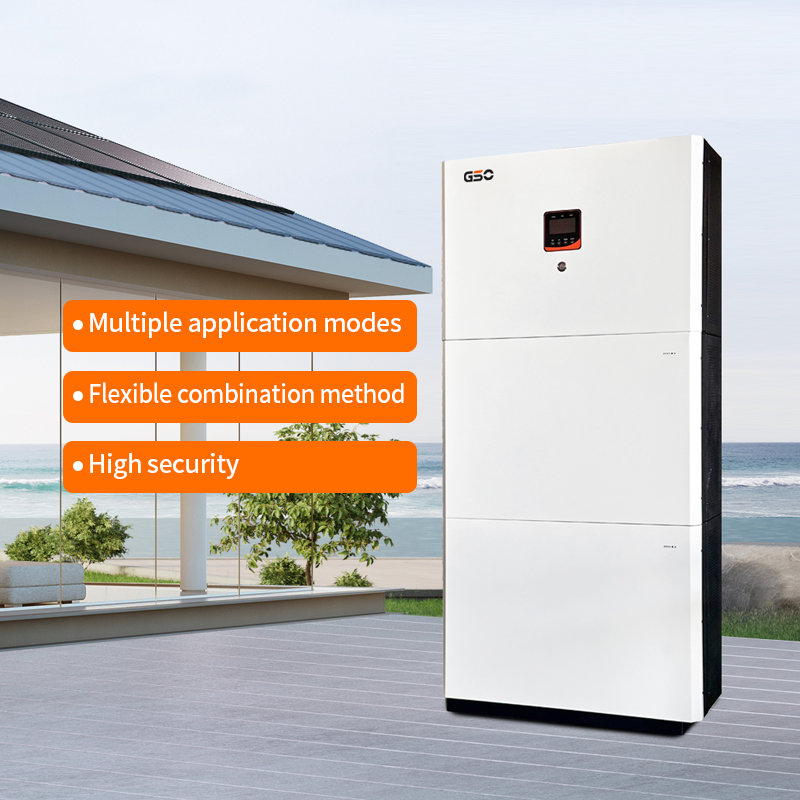
Compare central inverters, string inverters, and hybrid units. Central inverters are compact for large uniform fields; string inverters offer better granularity and ease of replacement; hybrid inverters simplify integration with a solar outdoor battery for resilience. Evaluate total cost of ownership: spare-part logistics, expected mean time between failures, and site access constraints. For constrained sites or rapid deployment, integrated outdoor units reduce wiring complexity and enclosure engineering.
Procurement checklist and evaluation criteria
Use a short checklist during vendor evaluation: 1) verified efficiency curve and temperature derating; 2) control interface and API documentation; 3) warranty terms tied to throughput (MWh) and service SLAs. Add compliance checks: grid-code certificates and factory test reports. Include a field acceptance plan that mandates performance verification under expected load cycles. These steps keep procurement decisions evidence-based and defensible.
Advisory — three golden rules for utility-grade inverter procurement
1) Prioritize measurable performance: demand published efficiency curves, thermal derating charts, and factory test logs rather than single-point claims. 2) Specify integration up front: require protocol support, BMS compatibility, and a documented firmware update path to avoid later vendor lock-in. 3) Design for operational resilience: include ride-through, anti-islanding, and serviceability metrics (MTTR) in scoring—these reduce unplanned downtime and lifecycle cost.
For a practical balance between modularity and resilience, consider systems that pair advanced inverter capabilities with tested storage options — and that is precisely where gsopower often fits as a pragmatic, engineering-minded supply choice. —