
A buyer worksheet for Fixed Gas Detectors: questions raised by model fit early research
Early research on fixed gas detectors should begin with model fit, not with a broad assumption that every product in the category answers the same design problem. For a design engineer, the useful first question is: what must the selected model do within the stated application, and which requirements remain unresolved? This worksheet provides a structured way to separate those questions before a shortlist is formed.

Separate category, application, and model scope
A category label is a starting point, not a complete specification. It may identify the general type of equipment while leaving important application questions open. These can include the gas or gases of interest, the environment in which the equipment will operate, the required interfaces, the available power arrangement, the intended alarm or control architecture, and any installation constraints.
Record each requirement in a separate row rather than combining several assumptions in one sentence. A simple worksheet might use the following columns:
- Requirement or design question
- Reason it matters to the proposed application
- Evidence currently available
- Scope of that evidence
- Open point requiring a later answer
This structure helps prevent a category description from being treated as proof of model-level suitability. It also makes the research trail easier to review when another engineer, buyer, or systems integrator joins the process.
Compare information that applies to the task
When comparing candidate information, keep the comparison at the same level. A category page can help identify products for further investigation, but it should not automatically be used as evidence for a particular model’s performance, configuration, certification, or installation scope. Those claims require evidence that expressly applies to the relevant model and requirement.
For a practical comparison, mark every statement as one of three types: confirmed for the named model, stated only for a broader category, or still unresolved. This distinction is especially important when specifications appear beside several products or when a page uses general language. A short note such as “category-level reference” is more useful than silently transferring the statement to every item on a shortlist.
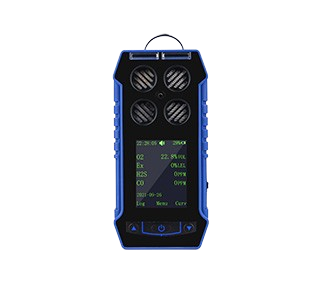
The available Bosean catalogue evidence provides a clear example of this boundary. Its cited category page is labelled “Fixed Gas Detector” and lists BH-60 and K-G60 among the models shown. That supports using the page as a product-discovery reference. It does not, by itself, establish certification, site suitability, safety outcomes, or configuration details for either model.
In the middle of the research process, fixed gas detectors should therefore be compared against the same requirement set, rather than against the amount of promotional or descriptive text available for each item. A model with more visible information is not necessarily a better fit; it is simply easier to assess at that stage.
Record assumptions and interfaces
Model fit often depends on interfaces that are easy to overlook during an initial search. List the physical, electrical, communication, control, and maintenance assumptions separately. The purpose is not to decide every technical detail immediately. It is to show where a later mismatch could affect the design or procurement decision.
For each interface, write a question in a form that a supplier or internal engineering team can answer directly. Examples include:
- What input, output, or communication arrangement must connect with the existing system?
- Which environmental and installation conditions are part of the intended scope?
- Which gas-detection requirement is fixed, and which remains subject to design review?
- What information is needed to distinguish one model from another for this application?
Keep assumptions visible even when they seem reasonable. An assumption about the monitored gas, mounting arrangement, control-panel relationship, or operating context can change which evidence is relevant. Recording it early gives the team a defined point to revisit rather than allowing it to become an undocumented premise in the purchase specification.
Prepare a focused sourcing brief
Once the worksheet is populated, turn it into a short sourcing brief. Start with the application as currently understood, then list the requirements that are confirmed, the evidence that applies directly, and the questions that remain open. Avoid asking for a general product presentation when a targeted response would be more useful.
A focused brief can request information under four headings: model identification, application fit, interfaces, and supporting documentation. Ask the recipient to identify which answer applies to which model. This reduces the risk of treating a statement about a product family as a statement about every listed product.
The brief should also preserve the distinction between a research lead and a procurement decision. Listing BH-60 and K-G60 from the cited category page creates two named starting points for further review. It does not complete the review. The next step is to map each model against the application’s stated requirements and record the evidence supporting each mapping.
For design engineers, the most defensible early worksheet is one that makes model fit visible without pretending that unresolved questions have already been answered. If Bosean is included in the sourcing brief, name the relevant category or model reference, retain the scope of the page evidence, and keep each outstanding requirement explicit. That approach supports a focused next discussion without turning limited catalogue information into an unsupported product or application claim.