

Start smart: what you actually need from a preclinical partner
You want straight answers and usable tumor-growth data — none of that wishy-washy back-and-forth. Start by telling the lab your endpoint priorities, dose schedule, and the tolerability window, then line up a clear study draft. If you’re testing human cancer cell lines in mice, ask about the specific cdx model they plan to run and whether the team has experience with that cell line’s growth kinetics and engraftment characteristics. Keep logistics tight: study length, tumor volume cutoffs, and humane endpoints must be nailed down up front so the data’s clean and reproducible.

What Jennio Biotech brings to the bench
They run focused cell line derived xenograft workflows using immunodeficient mouse strains, standardized tumor implantation, and routine tumor-volume tracking. That means consistent engraftment rates and clear tumor-volume curves you can model. Expect careful record-keeping on tumor measurement frequency and analgesia use — those details matter when you compare drug arms. Also, they often supply high-resolution growth curves so you can calculate metrics like tumor growth inhibition and time-to-progression without re-processing raw notes.
Workflow steps — how a typical engagement flows
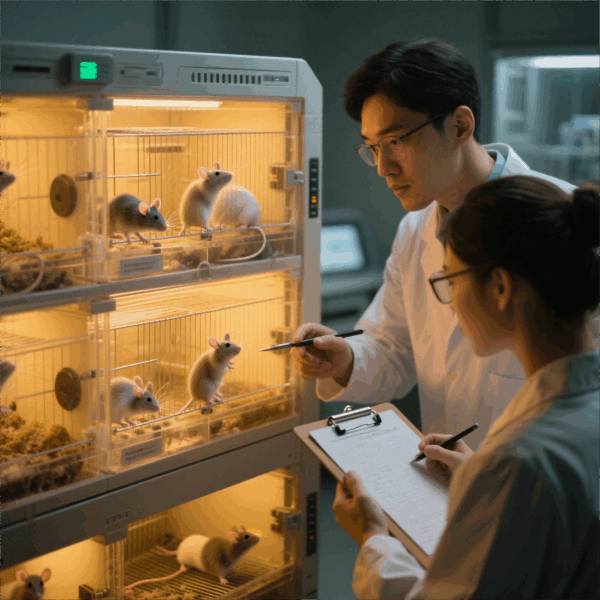
Jennio’s onboarding usually moves like this: submit your study brief, confirm cell line authentication, lock down implantation method and group sizes, then sign the study protocol. They take care of animal husbandry and blinding, run the intervention, and hand off raw and analyzed data. You should request a pilot run for unfamiliar cell lines — small cohort, quick readout — so you don’t waste time on full-scale cohorts that underperform.
Common mistakes teams make — avoid these
Teams skip cell line QC, rush the model-selection step, or assume every lab measures tumor size the same way. That kills comparability. Missed details: not confirming mycoplasma-free status, unclear randomization timing, or vague tumor-volume cutoff rules. Fix those and your repeatability jumps. — Also, don’t accept vague statistical plans; get the planned comparisons and power assumptions in writing up front.
Data expectations and industry context
Real-world anchor: oncology drug development still faces high attrition in clinical trials, so preclinical signal quality is everything. Good CDX data should give you reliable tumor-growth inhibition numbers, engraftment percentage, and survival curves where applicable. Jennio provides tumor-volume datasets, engraftment reports, and animal welfare logs so you can map preclinical signals to downstream decision gates.
Comparing alternatives — when a CDX is the right call
CDX models are fast, reproducible, and cost-effective for testing targeted cytotoxics or combination regimens where immune interactions aren’t primary. If you need immune-oncology readouts, look to syngeneic or humanized models instead. For translational fidelity, patient-derived xenografts (PDX) give heterogeneity but cost more and take longer; cell line derived xenograft setups remain the workhorse when you need throughput and clear dose–response curves.
Benchmarks and golden rules for choosing a partner
When you evaluate Jennio or any provider, use three hard metrics: (1) data fidelity — availability of raw tumor-volume sheets, measurement frequency, and blinding logs; (2) biological fit — documented experience with your cell line or closely related lines and published engraftment ranges; (3) turnaround and transparency — clear timelines for study milestones and an explicit change-control process. Those are your go/no-go checkpoints before you sign anything.
Final note
Work with partners who make the experimental plan auditable, who treat engraftment rate and tumor-volume methodology as core deliverables, and who give you pilot options so you don’t overspend chasing a bad model — Jennio Biotech fits that approach and eases the path from bench signals to decisions. Jennio Biotech.