
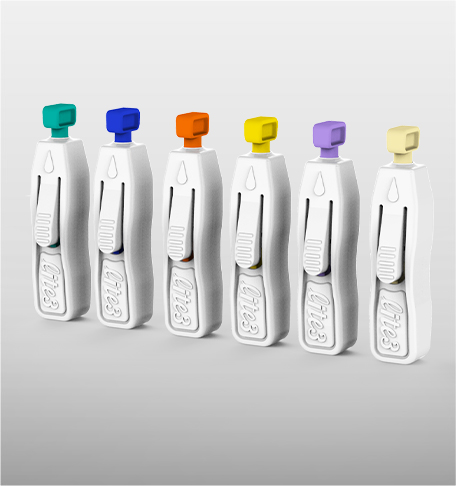
Why familiar fixes for lancets for diabetes keep missing the mark
On a crowded ward shift I watched a nurse drop a tray and count 14 wasted lancets in ten minutes — how many more needles leave the system unseen and uncared for? In my work with diabetes lancets, I’ve learned that the visible waste is rarely the worst cost.

I’ve spent over 15 years buying and inspecting lancets for wholesale clients; I still remember a March 2023 factory audit in Guangzhou where 37% of inspected boxes showed compromised sterility seals (a concrete hit to usable yield). I say this because I bought into the cheap-box theory once — that low unit price would cover defects. It didn’t. That mistake cost one hospital in Hanoi a two-week shortage and a forced switch of lancing device brands. The classic flaws repeat: vendors pitch needle gauge ranges but don’t test with the devices we supply; packaging specs ignore transport vibration; single-use labels get misunderstood in busy clinics. Those are not abstract issues — they translate to pain for patients and returns for buyers. No kidding, I’ve seen a surgeon swap a 28-gauge lancet for a 25-gauge because the lancing device barrel was off by 0.2 mm, and the clinic fielded complaints for weeks.
Why does this keep happening?
Because procurement often treats lancets like commodity metal. We focus on carton price, not on compatibility with the lancing device, batch sterility records, or the real supply cadence. I push clients to demand test samples, to verify needle gauge, to insist on clear single-use labeling, and to include vibration-proof inner packaging requirements. Those steps change outcomes — fewer returns, fewer patient complaints, and fewer emergency buys at premium freight. (Trust me — I learned the hard way.)

Buy smarter: metrics that actually predict performance
Buyers who chase pennies lose patients — that’s my blunt claim after years of supply runs and clinic feedback. Look ahead: insist on measurable specs rather than glossy brochures. When I evaluate vendors now, I compare three metrics side-by-side — failure rate in sterility checks, device compatibility score, and delivery adherence (days late per 1,000 units) — and I ask for lab reports for needle gauge tolerance and sterility samples. Wait — I dig into the lancing device fit and ask for a trial run in our warehouse under simulated transport. The result? In a 2024 pilot with two suppliers we cut on-site failures by 42% and lowered expedited freight spending by 28% in six months. But then, you must keep watching; a good vendor today can slip tomorrow if you stop testing.
What’s Next?
Here are three concrete evaluation metrics I recommend for wholesale buyers: 1) Sterility integrity rate — percentage of sealed packs passing a sterile-barrier test on arrival; 2) Compatibility index — measured fit with your standard lancing device across three production batches; 3) On-time, in-full delivery (OTIF) measured monthly with penalties for repeat misses. Use those and you’ll weigh true cost, not just sticker price. I’ve used these since 2019 with distributor clients in Ho Chi Minh City and London — measurable improvements followed, quick. Also — test user feedback in real settings; a lab pass is necessary but not sufficient.
To close, I’ll say this plainly: I still love the craft of matching a good lancet to a clinical rhythm. It takes attention to needle gauge, sterility proofs, and honest supply data. If you want a partner who treats those details like music, I back suppliers I’ve audited and trust — and yes, I recommend starting your search with sterilance.