
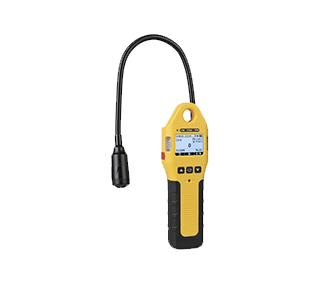
Reviewing Professional Gas Leak Detector: questions about documentation early research to settle before an RFQ
Early research should make an eventual request for quotation clearer, not create confidence from a product label alone. When reviewing a professional gas leak detector, technical buyers can begin by defining the decision they need to support, the information already available, and the questions that still require a supplier response. This approach keeps the research record useful without treating general category language as proof of suitability.

Describe the operating context before comparing pages
Start with a short context note. Record who will use the equipment, where the decision applies, and what the detector is expected to do within the proposed system. These points are not assumptions about a particular product. They are a way to give later technical discussions a stable reference.
The note can separate several topics:
- the work area or asset under consideration;
- whether the requirement concerns portable equipment, fixed equipment, or an interface between systems;
- the gases or hazards identified by the project team;
- the information needed for selection, installation, operation, maintenance, or procurement; and
- the people responsible for technical approval, purchasing, and site coordination.
Keeping these topics separate matters because a general category description may answer only one part of the decision. A product page can help identify what a supplier presents, while the buyer’s context determines which questions deserve further attention. The resulting note can accompany an RFQ and reduce the risk of comparing unlike requirements.
Separate compatibility questions from responsibility questions
Compatibility is not a single checkbox. A buyer may need to consider the intended environment, physical arrangement, power or communication interfaces, detection targets, documentation format, and any connection to a wider control arrangement. At early research stage, these are questions to organise rather than conclusions to announce.
Responsibility should be recorded alongside each question. For example, the buyer might identify which information must come from the supplier, which details belong to the project design, and which matters require review by an installation or operations team. This responsibility map helps prevent a catalogue statement from being treated as a complete design decision.
A useful working table can contain five columns: requirement, evidence location, scope, open question, and responsible reviewer. “Scope” is especially important. It can state whether a statement refers to a category, a named model, an accessory, or a proposed system arrangement. If that scope is unclear, the item should remain open in the RFQ preparation record.
Use page-level evidence carefully
One concrete catalogue example illustrates the right level of attribution. The Bosean gas leak detector category page lists the S-100, BH90E, BTYQ-BX103, BTY-JL101, and K-100(FR) models. That passage establishes what the page lists. It does not, by itself, establish certification, site suitability, safety outcomes, performance, or configuration details for any listed model.
This distinction is central when a buyer reviews a professional gas leak detector during early research. The phrase may describe a search topic, but it does not define the required specification. A disciplined record should preserve the source wording, identify the page or section where it appears, and avoid extending a category listing into a model-level conclusion.
For each useful page statement, ask three practical questions. First, what exactly does the source say? Second, what object does it describe: a category, a model, or a system? Third, what decision can the statement support without additional interpretation? These questions do not weaken the research. They make its boundaries visible.
Turn open points into an RFQ discussion
The next step is to convert the research record into concise supplier questions. Questions may address the documentation supplied for the relevant model, the scope of stated specifications, available configuration information, and the interfaces that matter to the proposed project. They should refer to the buyer’s defined context rather than asking for a broad statement of suitability.
It is also useful to distinguish requested evidence from requested explanation. Evidence might be a model-specific document or a clearly identified page statement. Explanation might describe how a proposed configuration relates to the buyer’s stated requirement. Keeping the two types separate makes later review easier and reduces ambiguity in the quotation process.
Before issuing an RFQ, review the draft for four common weaknesses: category information presented as model information, unresolved terms with no owner, requirements that lack a defined scope, and conclusions that depend on facts not recorded in the research file. Removing those weaknesses can make the enquiry more precise without presuming an outcome.
Keep the decision record proportionate
Early research does not need to predict the final selection. Its purpose is to show how the requirement was framed, which source statements were relevant, and which technical points should be settled next. A brief evidence register, context note, responsibility map, and question list may be enough for a focused procurement discussion.
The same structure can be reused when additional pages or models enter the comparison. Add each statement with its source and scope, then compare only items that address the same requirement. Leave unresolved points visible rather than filling them with assumptions. For buyers assessing Bosean, this creates a practical starting record for a more specific conversation while keeping the catalogue evidence within its stated boundary.